Create and refine the right concepts, with the whole line in view.
Turn sketches, flats, briefs, moodboards, and references into product concepts. Explore variations, review them in context, and carry the chosen direction forward.


Keep creative work connected to the decisions shaping it.
Teams can keep creating in tools like Adobe while using VibeIQ for briefs, concepts, reviews, and decisions. The work stays tied to the current product line as it evolves.

Create, compare, and decide in context.
Move from initial direction through iteration and review, with the brief and full line always in view.
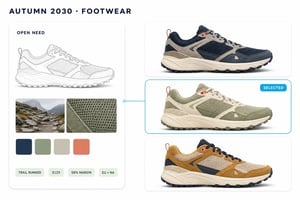
Start from a brief, sketch, flat, moodboard, reference, or open need in the line. Generate concepts from the item’s image, your references and colors.
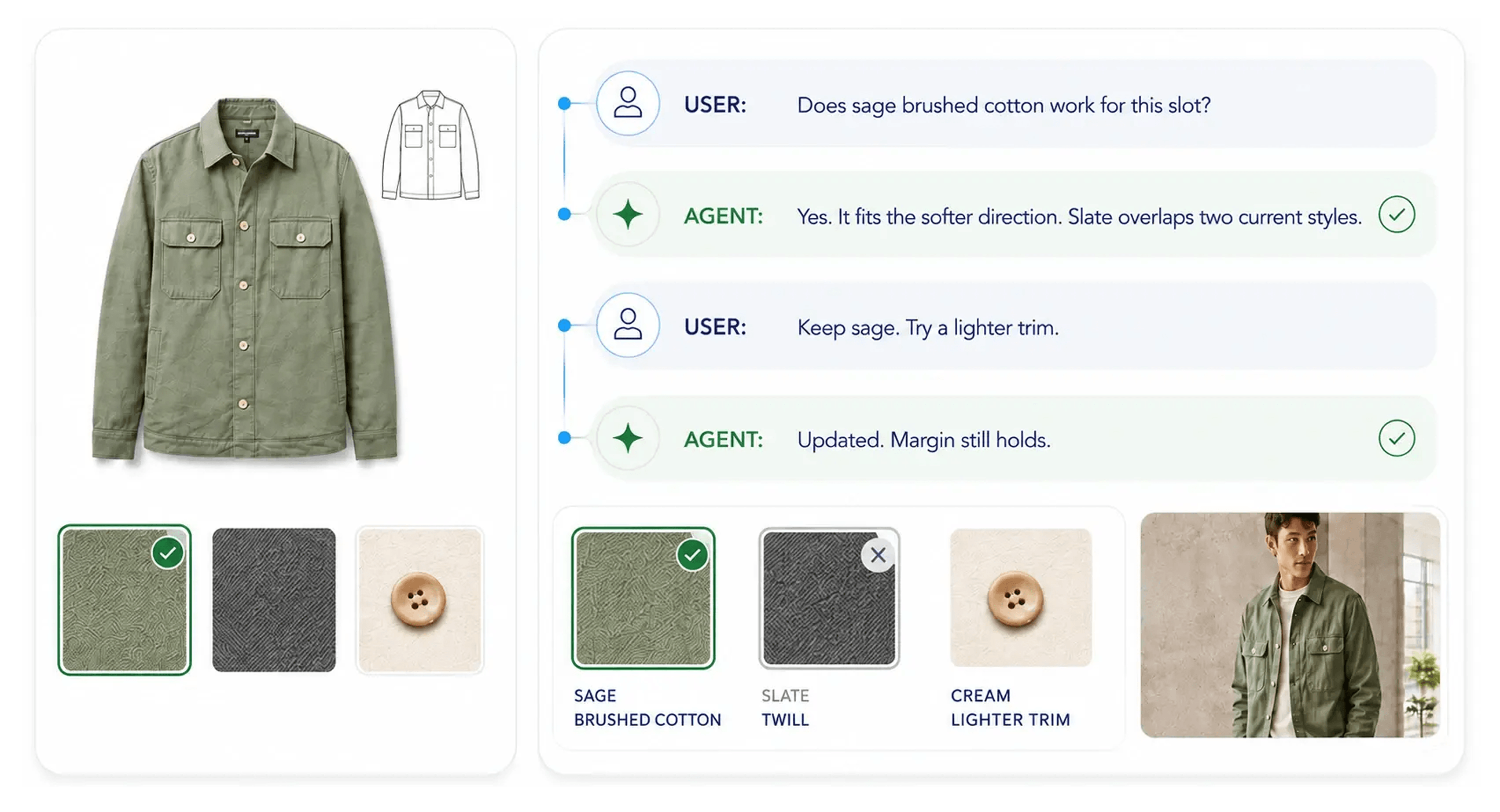
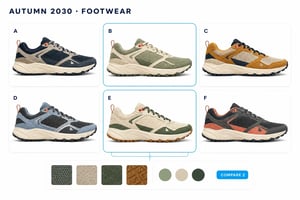
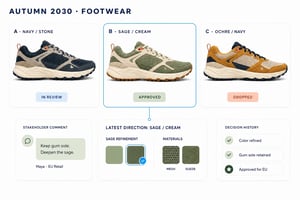
Generate multiple concepts, colorways, and variations, then compare and refine the strongest directions without starting over.

Change colors, materials, prints, graphics, trims, silhouettes, and product details as the concept evolves.

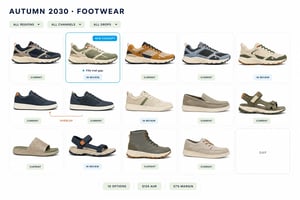
Review concepts alongside the current line to spot gaps, overlap, and opportunities before products move forward.

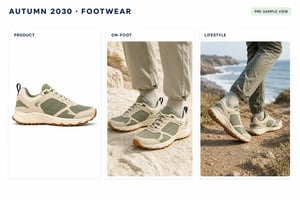
Create photoreal product, on-model, and lifestyle visuals so teams can review ideas before samples or shoots exist.

Compare options visually, capture feedback, and make changes during the review while the latest direction stays connected to the product.

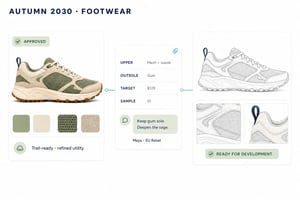
Keep the approved concept, product details, feedback, and creative direction together as work moves into development.

AI that starts with the line, not a blank prompt.
Generate, edit, and visualize from the item’s image, your references and colors, with the line in view.

More design time. Better decisions earlier.
Design collaboration software questions
Design collaboration software lets designers, merchants and product teams develop and review concepts together, with product imagery, details and the wider line in one place. It replaces the decks, email threads and separate boards that usually sit between design and merchandising.
Most global apparel and footwear brands use a mix of tools rather than one platform. Creative tools such as Adobe Illustrator and Photoshop handle design work. Whiteboards such as Miro handle early ideas and mood boards. 3D tools such as CLO and Browzwear handle virtual samples. PLM handles development and technical specs. A product line platform such as VibeIQ connects concepts to the line itself, so design and merchandising review and decide in the same place.
The strongest workflows put concepts and the line in the same view. Designers add concepts and colorway options to boards linked to product records, merchants review them against the assortment, price points and gaps, and decisions are recorded on the product rather than in a separate deck or email thread.
Concepts, colorways and assets live on the same product records merchandising uses to build the line. When a concept is selected or changed, line reviews and sell-in materials reflect it without rebuilding files. See how creative intent carries from mood board to line sheet.
Look for imagery and assets attached to product records rather than stored as loose files, so every colorway carries its current images, materials and key details. For footwear, that matters because one style can run across many colorways, widths and regions. In VibeIQ, product details can come from PLM or other systems through an integration or import, and boards, line reviews and presentations use those same records.
No. Designers keep creating in the tools they already use. VibeIQ is where concepts are reviewed against the line and decided on, and chosen products move into PLM for development.
AI concept generation turns sketches, moodboards and prompts into concept visuals and colorway or material variations. Selected results are saved to the product record, so design and merchandising review them alongside the rest of the line.