
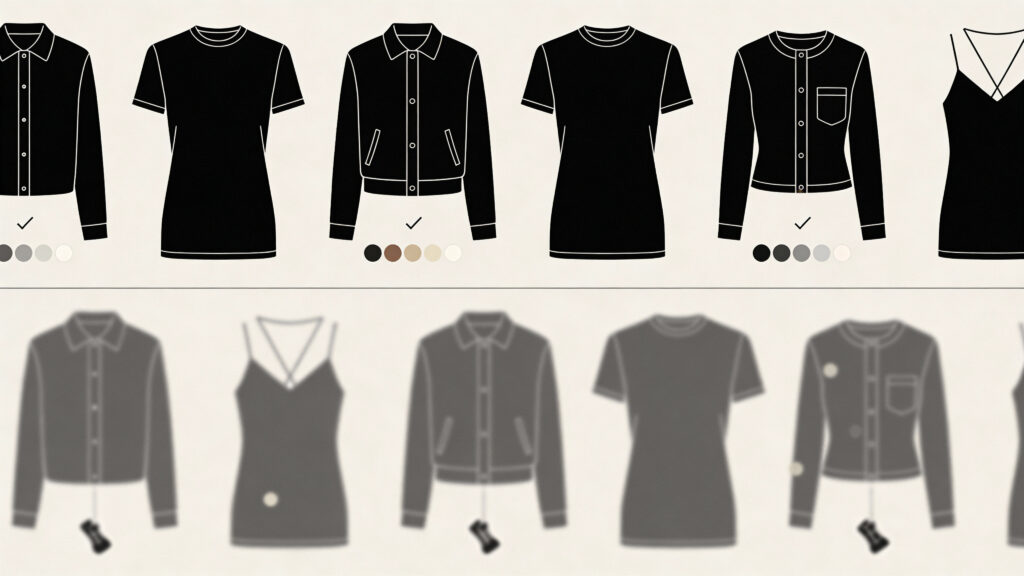
Over- and under-assortment issues don’t appear suddenly—they reveal themselves late, after teams have invested weeks (or months) in development. By the time the imbalance becomes visible, it’s already expensive to fix. Merchandising leaders end up fighting fires: pulling back SKUs, rushing new ones into the line, and trying to rebalance categories that should have been right from the start.
The root cause isn’t a lack of talent, strategy, or effort. It’s a lack of early, centralized visibility into the full assortment.
Without a unified, real-time view of the line as it evolves, teams can’t spot category gaps early enough or prevent SKU overload before it hits development. And the later these issues are discovered, the more costly and disruptive the fix.
It’s time to shift from reactive assortment correction to proactive assortment creation.
Why Over- and Under-Assortment Happens in the First Place
Even the most experienced merchandising organizations run into over- and under-assortment challenges every season. Not because they don’t know how to build a balanced line, but because they’re working without a complete picture during the moments that matter most.
Here’s what typically drives the imbalance:
- Teams work from disconnected files and static snapshots. Assortments live in spreadsheets, PDFs, PowerPoints, and team-specific documents. By the time files are compiled for review, they’re already outdated. Merchants think they’re reacting to the latest changes—but they’re not.
- Category views are incomplete or inconsistent. Without attributed line plans that roll up categories, price tiers, channels, and regions, the line is seen product-by-product instead of holistically. Category leaders don’t see where the gaps or excesses are until development is well underway.
- Regional and global versions drift apart. Regions build their own assortments. Global creates another. Bringing the two together becomes a spreadsheet exercise, not a strategic one. By the time discrepancies are discovered, the season is already locked in.
- Leadership sees the full picture too late. Executives often only see the total line at major checkpoints—and those checkpoints happen after development has begun. Their feedback is often urgent, corrective, and late.
None of these issues stem from poor decision-making. They stem from poor visibility.
The Cost of Discovering Assortment Issues Too Late
When assortment imbalances are found late in development, the ripple effects are felt across the entire product creation cycle.
Rework that slows the calendar
Teams scramble to drop SKUs, add new ones, or retool categories to hit strategic targets. These changes require updated visuals, new data, and repeated reviews.
Higher sample and development costs
Every late-stage correction demands additional resources: new samples, re-costing, vendor changes, or expedited timelines that drive up expenses.
Category-level performance risks
Excess SKUs in one category dilute demand. Underdeveloped categories under-deliver on sales targets. Both scenarios create margin pressure and reduce consumer clarity.
Erosion of leadership confidence
When leaders see repeated late changes or inconsistent category execution, it undermines trust in the process and slows decision-making.
Fixing assortment mistakes late costs more, takes longer, and puts the entire season at risk. The key is to eliminate the blind spots that cause them.
How True Line Plan Visibility Prevents Over- and Under-Assortment
Modern merchandising teams are shifting toward real-time, centralized visibility of the entire assortment—long before development begins.
Here’s what that looks like:
Fully attributed assortments everyone can see
Product data—attributes, visuals, costs, strategy tags—lives in one connected workspace. Teams no longer rely on static files or partial information.
Real-time category rollups that evolve as the line evolves
As merchants add, drop, or adjust SKUs, category counts, mix percentages, and price ladders update instantly. You see gaps and excesses the moment they form, not weeks later.
Cross-functional visibility before development begins
Design, planning, product development, and leadership can all see the same line at the same time. Early feedback ensures alignment before teams commit to costly next steps.
One source of truth for global and regional assortments
Centralized visibility allows global and regional teams to build assortments together—seeing differences, overlaps, and opportunities without reconciling multiple files.
The shift is simple but powerful: from reacting to assortment issues to preventing them.
The Business Impact of Getting Assortment Visibility Right
When merchandising teams gain true line plan visibility earlier in the season, everything improves.
- Better assortment balance. Teams build the right number of SKUs in the right categories at the right depths—before the cost and complexity of development begins.
- Faster, more confident decisions. Leadership can evaluate a real-time snapshot of the line, not a retrospective. This reduces back-and-forth and shortens decision cycles.
- Higher-performing categories. Balanced assortments drive clarity, reduce cannibalization, and help teams build lines that ladder up to the strategic and financial goals of the business.
- Stronger cross-functional alignment. Everyone—from merchandising to design to planning—shares the same picture of the line and operates from the same data foundation.
Visibility isn’t just an operational advantage, it’s a strategic one.
Modern Merchandising Platforms Reduce Over- and Under-Assortment
Fixing over- and under-assortment before it happens requires more than better file management—it requires a modern approach to product data. Platforms built for real-time assortment visibility help teams surface trends, balance categories, and align decisions long before development begins.
When you can see the whole line early, you can shape the season—not react to it.
Get a demo of VibeIQ and see how we can help unlock true assortment visibility for your teams.