
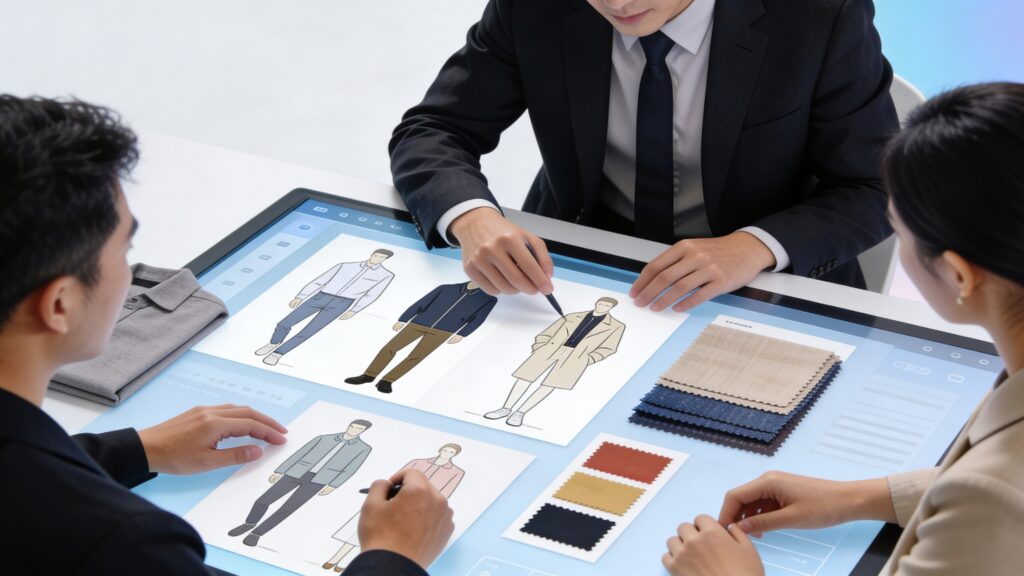
Some of the most important decisions in merchandising happen at the very beginning. Direction-setting, category investment, assortment structure, and product balance all take shape early in the process. These early choices determine how the line evolves, how teams execute, and ultimately how the season performs.
But while these decisions carry the most strategic weight, they’re also the ones that often take the longest to land.
For VPs of Merchandising, this creates a familiar tension. Teams are collaborating. Meetings are happening. Conversations are constant. Yet progress can feel slower than it should. Direction takes time to lock in, and momentum is harder to build in the early stages than expected.
The slowest part of the go-to-market process often happens right at the start.
Where early-stage delays actually come from
Early line planning is deeply cross-functional. Design is shaping the creative direction. Merchandising is building the assortment. Planning is evaluating investment and performance potential. Each group plays a critical role, and none can move forward in isolation.
But that dependency can also create friction.
Teams are working from different timelines, different tools, and often different versions of the line. A decision that seems straightforward on the surface may require multiple conversations before everyone feels aligned. Direction-setting stretches across reviews, updates, and follow-ups.
Common breakdown points start to emerge:
- Teams reviewing slightly different versions of the assortment
- Waiting on updates before making a call
- Revisiting the same decisions in multiple meetings
- Pushing sign-off to the next review cycle
No one is stuck. Everyone is working. But alignment takes time, and without alignment, progress slows.
The hidden cost of slow alignment
Early delays rarely feel dramatic. There’s no single moment where things come to a halt. Instead, the slowdown shows up in small ways.
More meetings are scheduled to reach agreement.
The same information is walked through multiple times.
Decisions take longer to finalize.
Teams hesitate to move forward without clarity.
Over time, those small delays begin to compound.
Timelines stretch quietly at the beginning of the process. Downstream teams wait for direction before they can act. Momentum fades before execution even ramps up. And the longer alignment takes, the more pressure builds on leadership to keep things moving.
For VPs of Merch, this friction is especially visible. You can feel where decisions are getting stuck. You can sense when teams are circling the same conversations. And you know that every extra week spent aligning early decisions pushes everything else further down the timeline.
Early delays don’t feel dramatic, but they have a ripple effect across the entire go-to-market process.
The real problem isn’t effort — it’s shared visibility
In most organizations, slow collaboration isn’t caused by a lack of communication. Teams are talking constantly. They’re reviewing, aligning, and sharing feedback.
The real issue is that they’re not always seeing the same, current picture.
When the line lives across static decks, spreadsheets, and separate tools, it becomes harder to maintain a shared understanding of what’s actually taking shape. Updates happen, but not everyone sees them at the same time. Interpretations vary. Context gets lost between meetings.
This creates friction in subtle ways:
- Teams need to clarify what has changed
- Assumptions don’t always match reality
- Conversations repeat as new information surfaces
Instead of making decisions quickly, teams spend more time getting aligned on the foundation of those decisions.
Why faster early decisions matter so much
Speed at the beginning of the process has an outsized impact on everything that follows.
When direction is set early, teams can move forward with confidence. Execution starts sooner. Adjustments happen while flexibility is still high. Work flows more smoothly from planning into development and beyond.
But when early decisions stall, everything behind them stacks up.
Teams wait for clarity before moving forward. Projects pause while alignment catches up. Momentum is harder to maintain. And the path to market becomes longer than it needs to be.
This is why early-stage alignment matters so much. The faster teams can agree on direction, the faster the entire organization can move.
How shared visual alignment speeds collaboration
One of the most effective ways to reduce early-stage friction is to ensure that everyone is working from the same, current view of the line.
When merchandising, design, and planning teams can clearly see how the assortment is evolving, alignment happens more naturally. Conversations become more productive. Decisions happen with more context. The need for repeated reviews decreases.
With stronger visual alignment, teams can:
- Identify gaps or overlaps more quickly
- Align on direction with fewer back-and-forth conversations
- Reduce the time spent clarifying updates
- Make decisions in fewer touchpoints
The dynamic shifts from waiting and re-explaining to reacting and moving forward.
What changes when alignment happens earlier
When visual line planning and reporting are streamlined, early-stage collaboration becomes faster and more fluid.
Teams are able to make better, more informed decisions earlier in the process because they’re working from a shared understanding of the assortment. Instead of waiting for updates or piecing together context, they can see what’s happening in real time and respond accordingly.
This leads to:
- Faster direction-setting
- Shorter alignment cycles
- Less back-and-forth across functions
- Stronger confidence in early decisions
And most importantly, it helps maintain momentum at the exact stage where it’s easiest to lose.
Keeping strategy moving forward
This is where having a more streamlined approach to visual line planning and reporting can make a meaningful difference. When the line is visible, current, and easy for cross-functional teams to understand, conversations become more focused and decisions happen faster.
For VPs of Merch, that means:
- Moving key decisions forward earlier
- Reducing friction across teams
- Keeping strategy momentum intact
- Supporting a faster, more efficient path to market
Early alignment doesn’t just improve collaboration. It accelerates everything that follows.
The executive takeaway
The biggest delays in merchandising don’t usually happen at the end of the process. They happen at the beginning, when teams are trying to align on direction without a shared, current view of the line.
The earlier teams can align, the faster decisions happen. The faster decisions happen, the smoother execution becomes.
Early alignment is what keeps momentum alive. When teams can see the same line, at the same time, decisions happen faster and execution starts sooner.
Better alignment, earlier decisions — that’s the real unlock.
Get a demo of VibeIQ to see how your merchandising teams can align with cross-functional stakeholders in one, collaborative platform with up-to-date product data and visuals as the line evolves.