.svg)
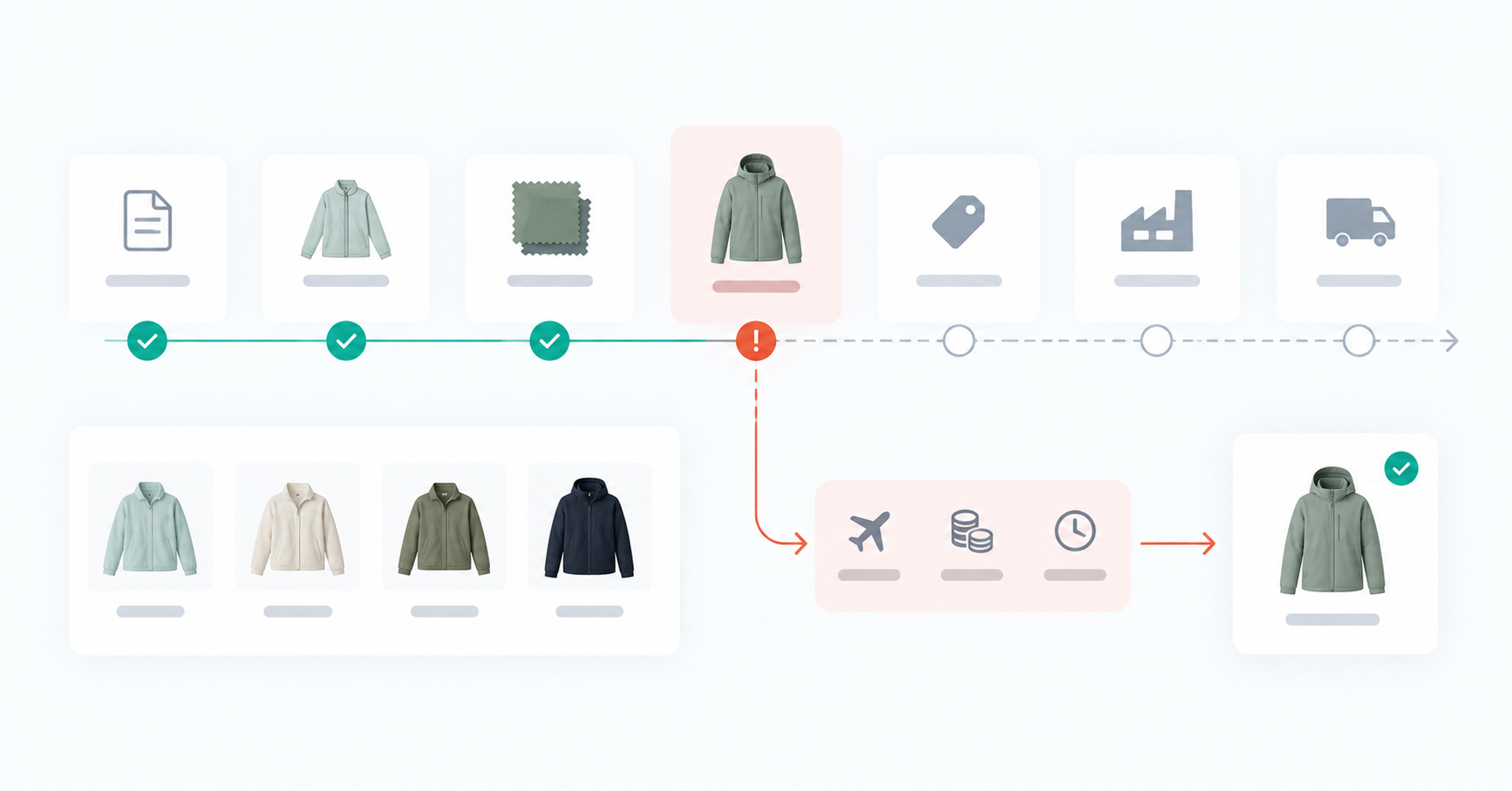
Product creation runs on a calendar, but not every date carries the same weight. Some meetings can move. Other decisions create the conditions for every team downstream to do its job. If one of those dates slips, the whole line may feel the impact.
That chain of essential milestones is the critical path. It connects the decisions, approvals, and handoffs that must happen on time for a product to reach the market as planned. In practice, it is much more than a project schedule. It is one of the ways a product business runs.
Product creation is full of competing demands across seasons, items, and functions. Without a clear view of which dates are genuinely critical, everything can look equally urgent. With it, teams can focus where a delay is most likely to affect the line.
The calendar that runs the business
A critical path is a sequence of high-level milestones with target dates and clear functional ownership. Depending on the company and product category, those might include product briefs, design and line reviews, tech packs, sample approvals, costing decisions, line close, ready-to-buy, and marketing deliverables.
It is not a list of every task involved in creating a product. That distinction is important. A detailed task plan may contain hundreds of activities, many of which can move without changing the final delivery date. The critical path isolates the dates and decisions that unlock the next stage of work or protect a fixed business outcome.
Those events usually fall into a few practical types. A gate allows the next team to begin. A decision point commits the business to a direction, such as selecting the final line. A handoff transfers approved work to another function. A working session resolves an issue that would otherwise hold up progress.
Each milestone also needs an owner. Design may own a design review. Merchandising may own line close. Product development, costing, sourcing, or marketing may own other points on the path. Everyone follows the same overall calendar, but responsibility moves across functions as the product advances.
Why the path becomes difficult to manage
The challenge is not creating one calendar. It is managing several overlapping calendars while products move through them at different speeds.
Product development cycles often stretch beyond a year, so teams may be developing several seasons at once. A final line review for one can overlap with a design review for another and a ready-to-buy deadline for a third. Meetings also have to account for travel and factory visits; the people needed to decide must be available.
Then there is variation by product type. A coat or sweater may need a different timeline from a T-shirt. Footwear and toys can introduce molds, tooling, and more approval points. The line still has to meet a common market date, but its items may take different routes to get there.
Two broad streams must converge as well. Product and line creation move through design, development, sourcing, costing, and buying. Meanwhile, marketing and visual merchandising prepare how the product will appear to the customer. If the tracks lose contact, the campaign can promise one thing while the product on the floor delivers another.
This is why a critical path cannot live only as a row of dates in a spreadsheet. The dates need to be connected to the products, owners, seasons, and decisions they govern.
What happens when a critical date slips
The final market date usually does not move simply because an early milestone was missed. Instead, the remaining work is squeezed into less time.
At first, the effect may seem small: a brief arrives late, a sample approval is delayed, or design changes something after production decisions should be final. But the lost time travels downstream. Work is expedited, approvals are rushed, and production windows narrow. A product meant to travel by ocean may need to travel by air to reach the distribution center on time.
Some air freight is planned. A company may reserve it for production issues or to chase unexpected demand for a strong seller. Unplanned air freight is different. It is often the visible cost of an earlier process failure, and it reduces the margin on that product before it reaches the customer.
The team absorbing the cost may not be the team that caused the delay. Logistics or the product engine may be measured against freight spend, while the decision that created the problem happened earlier in design, merchandising, or elsewhere. If target dates, actual dates, owners, and product status are not connected, the business sees the expense without its cause.
That makes the same problem likely to happen again. The company absorbs the margin hit, moves on to the next season, and never gets the evidence it needs to improve the path.
Visibility changes how teams spend their time
The value of critical path visibility is not that it gives people more dates to manage. It helps them decide where to pay attention.
Imagine a merchant approaching a purchase-order deadline. Products that are approved and ready to buy do not need the same level of attention as products still waiting on a first sample, costing decision, or final sign-off. A useful view separates the healthy items from the ones at risk, shows which milestone is holding each item back, and makes the owner of the next action clear.
That changes the daily question from “What do I need to check?” to “Which products could put the line at risk if we do not act now?”
To answer it, teams need to compare target dates with actual progress. Knowing that a sample was approved on a certain date is only half the story. Was it early, on time, or late? If it was late, is there enough room later in the path to recover? Which downstream dates are now exposed? Who can make the decision that protects them?
The same information helps leaders see patterns. If one category repeatedly misses a milestone, the path may be unrealistic for that product type. If delays cluster around a handoff, ownership or decision rights may be unclear. Actual timing data can improve the calendar instead of simply copying it into the next season.
Visibility also creates a fairer model of accountability. Teams can trace a late delivery or unplanned cost back through the decisions that shaped it, rather than assigning responsibility to whichever function encountered the consequence at the end.
Protecting the path without adding bureaucracy
Critical path management can become counterproductive if it turns into a rigid workflow that blocks people from moving forward because someone forgot to update a field. The aim is not to police every task or create another administrative burden. It is to make risk visible while there is still time to respond.
A practical approach starts with a manageable set of milestones. For each one, define the target date, owner, applicable products, and evidence of completion. Track the actual date without forcing teams into unnecessary dependencies. Then answer real working questions: what is due across active seasons, what is overdue, what is assigned to me, and which products are not ready for the next gate?
The path should also include both sides of the customer proposition. Product status and creative execution need shared visibility, so marketing and visual merchandising are responding to the line that will actually reach the market, not an earlier version of the intent.
Most importantly, the goal is not to make every decision earlier. It is to shorten the overall timeline so that the decisions that benefit from current market information can happen closer to the customer. Protecting the critical path creates room for that. When teams spend less time recreating information, chasing status, and recovering from avoidable delays, they can make better decisions later with greater confidence.
The critical path is therefore more than a calendar. It is a shared view of how the line moves, where risk is building, and which decision matters next. When that view is connected to the products themselves, teams stop treating every issue as equally urgent. They can protect the milestones that protect the line—and intervene before a missed date becomes a missed margin, a compromised launch, or a scramble at the end.
See where product risk is building before it affects the line.
Connect product status, milestone dates, and ownership in one shared view so teams can act earlier.