
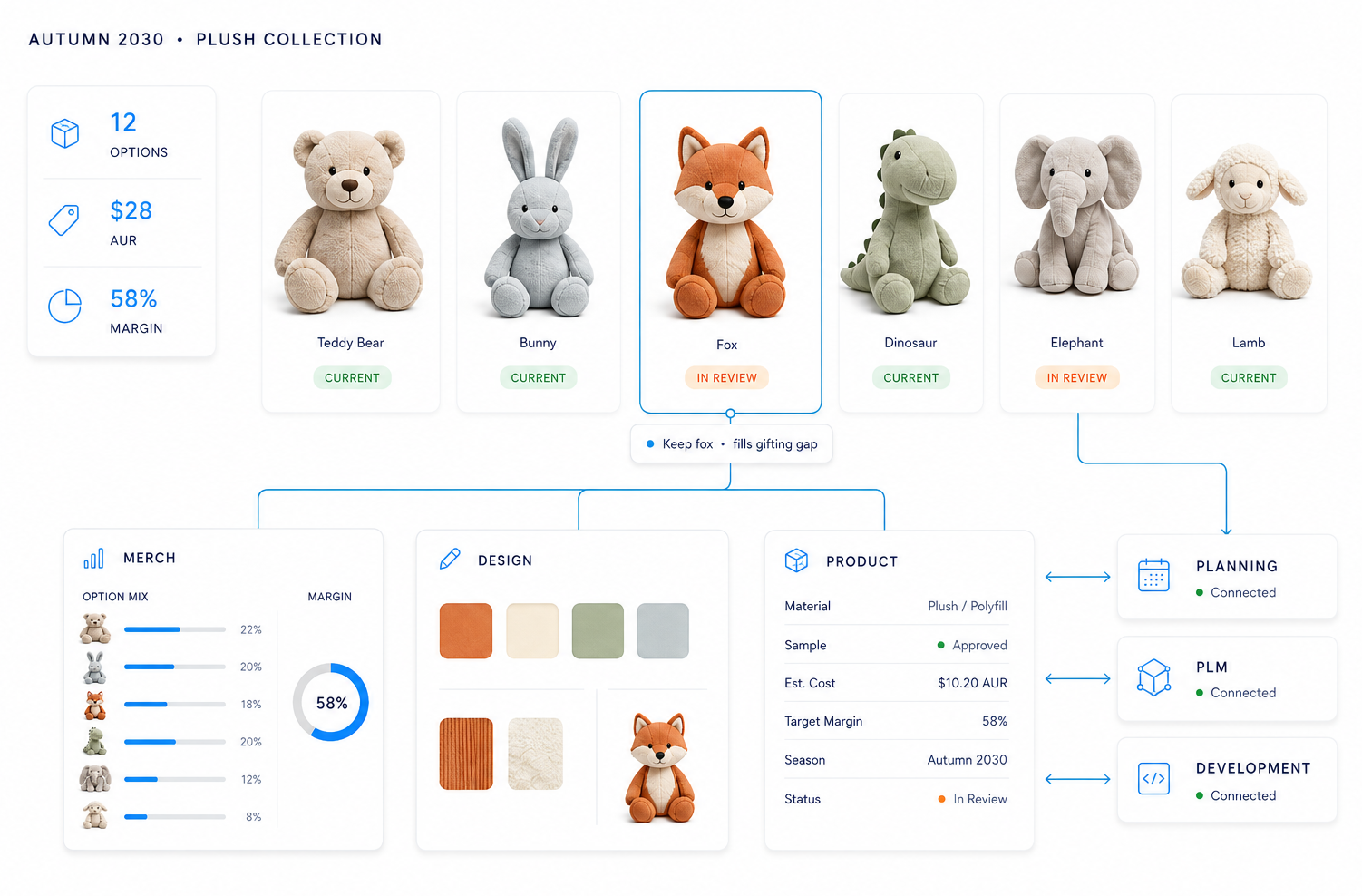






Your planning transformation doesn’t end with the targets.
VibeIQ is where merchandising, design, and product teams turn those targets into the actual product line, without replacing the systems already in place.


The systems changed. The decision process often didn’t.
Planning may be modernized, but turning targets into the actual line still happens in spreadsheets, decks, and meetings. That is where transformation value gets lost.
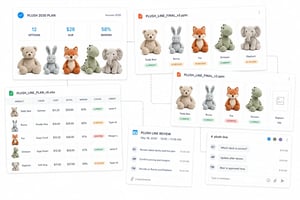
Change the operating model, not just the systems.
Keep targets, product choices, trade-offs, approvals, and changes connected instead of reconstructing them across meetings and files.

Merchandising, design, planning, product, and regional teams work from the same underlying set in the views they need.

Cuts, swaps, approvals, feedback, and rationale stay attached as the line evolves.

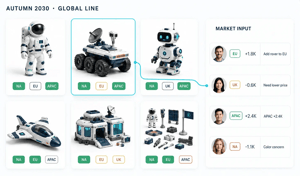
Markets work from the global line while adoption, concerns, forecasts, and local needs flow back before the assortment is finalized.
AI works from the targets, product, assortment, creative, and decision context already attached to the line instead of starting in another isolated tool.

That's what opens up the door on process change."

Perspective
Make change management part of the operating model
Process change should show up in the numbers.

Retail transformation questions
VibeIQ sits between financial planning and PLM. It is where merchandising, design and product teams turn targets into the actual product line, connecting the systems already in place. Read the report on why the product line is being built outside PLM.
No. Planning stays the source of financial targets and PLM stays the system for development. VibeIQ connects with both, as well as DAM and ERP systems.
Most teams start with one category and one recurring line review, measure the preparation and rework it saves, then expand by brand, region or channel.
VibeIQ supports single sign-on through SAML providers such as Okta and Azure AD, workspace and field-level permissions, and encryption in transit and at rest.

