





Skip to content
Private-Label Product Development Software

Private label has outgrown the spreadsheet.

Planning sets the targets. VibeIQ is where owned-brand teams turn them into the actual line, with margin, creative work, and buyer input in context.

Owned-brand home textiles portfolio in VibeIQ

Your business was built to buy. Now it has to create.

Private-label teams are creating product inside workflows still built around spreadsheets, decks, email, and separate development plans.
Margin becomes clear too late
Costs, prices, and options change while the line develops, but the full IMU impact is difficult to see until choices are already narrowing.
Home product workflows fragmented across spreadsheets and documents
Nobody sees the whole portfolio
Development happens by program and category, making overlap, gaps, and risk difficult to spot across owned brands.
Buyers enter too late
Category and channel teams often see the developing line after product decisions are already moving toward commitment.

Owned brands shouldn’t be built in handoffs.

Bring targets, product, creative work, vendor input, and buyer intent into the same developing line.
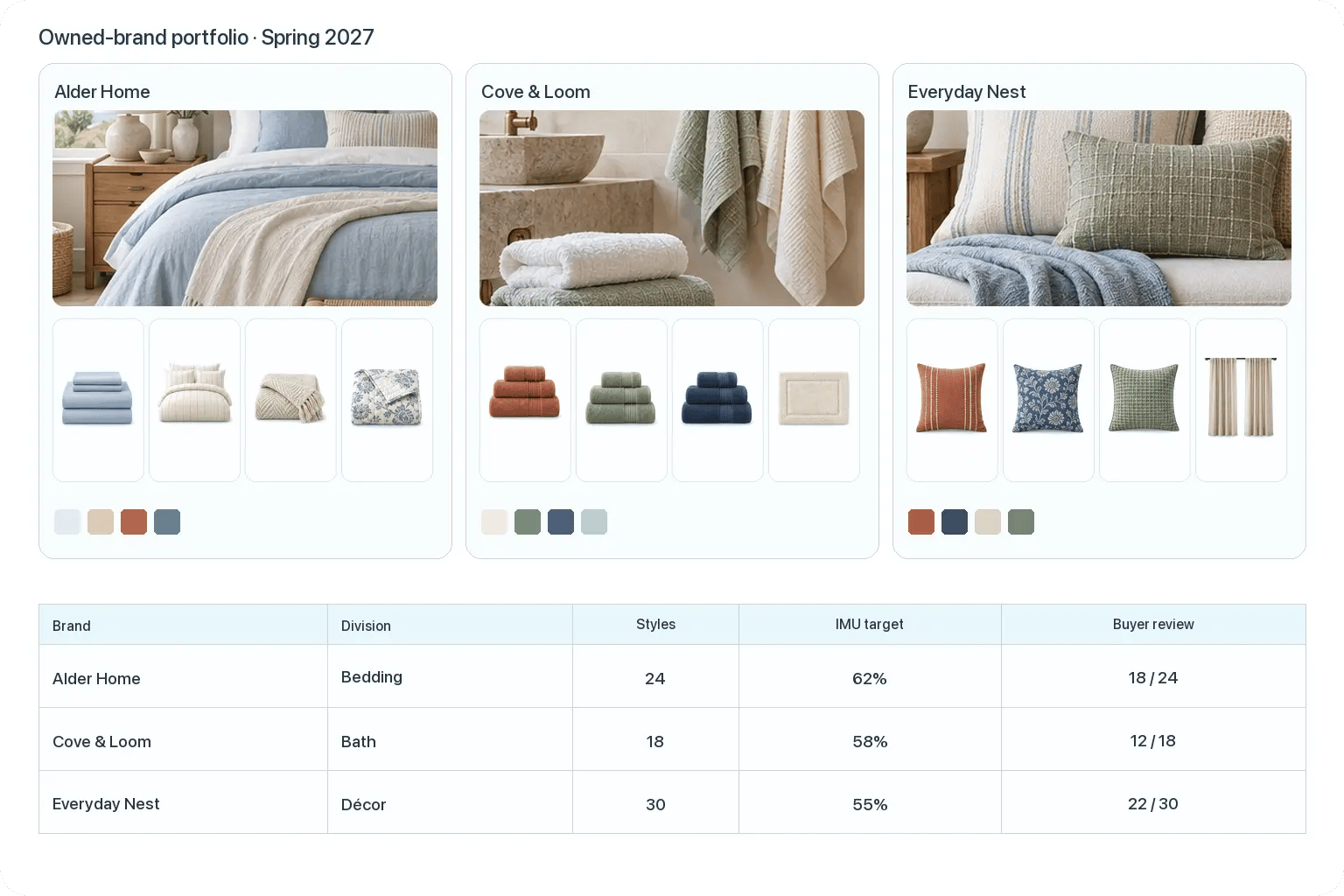
See the whole portfolio earlier

See development against targets across brands, categories, divisions, and seasons to spot overlap, gaps, and risk earlier.

Home textiles portfolio developed against targets
Design margin into the line

See how cost, price, and assortment decisions move the line against its IMU target while there is still time to respond.
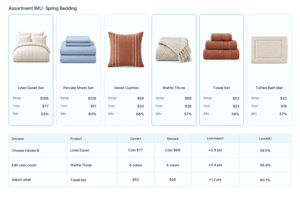
Design and margin built into a home textiles line
Review vendor input against the line

Bring vendor concepts and finished-goods options into the current assortment instead of evaluating them across email threads and attachments.

Vendor input reviewed against the home line
Keep creative work tied to the line

Connect concepts, visual direction, and product information to the developing line so creative work responds to the needs of the full set.

Creative work connected to a home textiles line
Bring buyers in earlier

Let buying and channel teams see the developing assortment and capture adoption while it can still change.
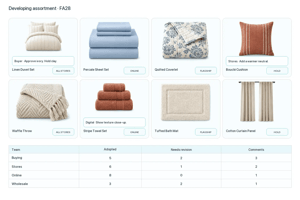
Buyer and channel feedback on a home textiles line

Portfolio complexity compounds fast.

At one large owned-brand organization, product creation ran across 600+ Excel plans and 850+ design decks a year.

Across brands, the same operating model has helped teams cut unnecessary options earlier, reduce manual work, and get new workflows live quickly.

Vera Bradley logo
10% fewer SKUs
Before sampling
Kizik logo
1 week → ≤1 day
Prep for a major line-plan milestone
New Balance Logo
3 months
From focused pilot to a working VibeIQ application
carters_logo
36 hours per merchant, per season

Returned time spent reconciling the line.

Private-label product development questions

What is private-label product development software?

Private-label product development software helps retailers turn owned-brand targets into actual products. Merchants, designers and sourcing teams build and review the line together, with margin and buyer input in view, before committing to development.

How is VibeIQ different from PLM for private label?

PLM manages specifications, suppliers and development once products are decided. VibeIQ is used earlier, to build and review the line against targets, so fewer products are developed and then dropped. It works alongside your PLM. Read why teams prototype the line before sampling.

Can VibeIQ support multiple owned brands and categories?

Yes. Teams build lines by brand, category, region or channel from shared product records, and see how each one rolls up against its targets.

Who on a private-label team uses VibeIQ?

Merchants and buyers, product managers, designers and sourcing teams work in VibeIQ, with planning providing the targets they build against.

Put one owned-brand program to the test.

Bring a range plan, current line, or margin target. We’ll show where the targets and line lose connection, and what could change earlier.