
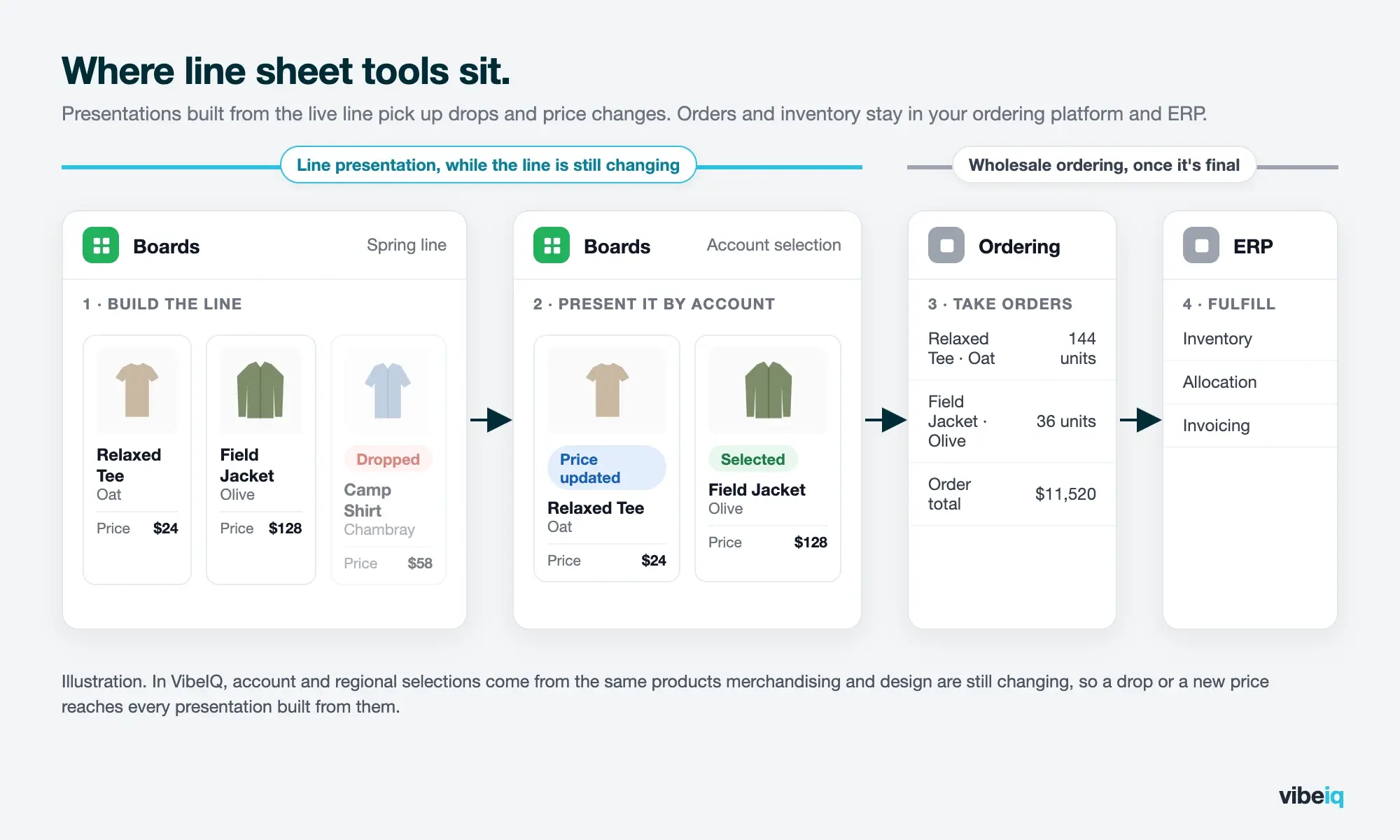
Digital line sheet and showroom tools fall into two groups: wholesale ordering platforms that take orders from retail buyers, and line presentation tools that build line sheets and sell-in presentations from the product line itself. If you sell wholesale and your line changes before market, you need one of each.
Search for "digital line sheet software" and you'll find both kinds mixed together. That makes evaluation harder than it needs to be, because the tools solve different problems. One helps you capture and manage wholesale orders. The other helps you present a line that is still changing without rebuilding the deck every time.
“[She]’s been working on this PowerPoint deck for… a couple of weeks… probably 30 or 40 [hours]… And then the challenge is once we think we have it ready for presentation in our meeting with the salespeople… the VLP is changing constantly. There’s adding, there’s dropping… So it’s very tedious. And there’s also just so much room for error.”
VP of marketplace merchandising at a performance footwear brand
This guide explains the difference, compares eight tools that apparel, footwear and lifestyle brands evaluate and lists the questions worth asking in a demo.
Last updated: November 2026
Ordering platforms vs line presentation tools
- Wholesale ordering platforms connect brands to retail buyers and handle the transaction: branded B2B storefronts, digital catalogs and line sheets, virtual showrooms, order writing, order management and often payments. The brand's ERP usually stays the system of record for inventory and orders.
- Line presentation tools sit earlier, between merchandising and sales. They build line sheets and sell-in presentations from the product records and assortments the team is already working on, so imagery, prices and assortment changes don't have to be copied into a new file each time.
If your main problem is order capture, reorders and retailer self-service, start with an ordering platform. If your main problem is that line sheets and sell-in decks go out of date the moment the line changes, look at a line presentation tool. If you have both problems, you will probably need both.
8 tools at a glance
Vendor details are taken from each company's own website in November 2026. Features change often, so confirm current capabilities with each vendor.
The tools in more detail
Brandboom
Brandboom is a wholesale platform built around line sheets and presentations. Brands build line sheets with a drag-and-drop builder, share them as a link that works as a 24/7 showroom, and take orders online, through a mobile app or at trade shows. It supports account-specific pricing, embedded video and 360-degree product views, and integrates natively with Shopify.
Best for: brands that want shareable line sheets and straightforward online ordering.
Centric Boards
Centric Visual Boards run on product data held in Centric PLM and other connected systems, such as planning and ERP. Within that, Centric describes the boards as visualized pivot tables combining that data with 2D and 3D images, and the family includes an Omnichannel Showroom Board and a Visual Assortment Board for digital catalogs and buying sessions.
Best for: brands standardized on Centric PLM that want visual boards on products already set up there.
Colect
Colect is a B2B wholesale platform for fashion, bodywear, footwear and sportswear brands, with most of its customers in Europe. Its Sales App gives reps digital lookbooks, line plans and order writing that works online and offline. The Brand Portal lets retailers order, check stock and download assets themselves, and the Digital Showroom runs on single or multi-screen setups for in-person appointments. Creator Studio adds AI-generated packshots and on-model imagery.
Best for: European brands with field sales teams and showroom appointments.
Elastic Suite
Elastic Suite is a B2B ecommerce platform used by outdoor, apparel, footwear, sporting goods, cycling and workwear brands, among others. It combines digital catalogs with 360-degree and on-model imagery, online ordering, sales rep tools, retailer self-service and analytics, with a large library of ERP integrations.
Best for: brands with complex dealer networks, especially in outdoor and sporting goods.
JOOR
JOOR is a global wholesale platform that connects fashion brands with retail buyers. It offers virtual showrooms, digital line sheets, order management (including a tablet app for in-person appointments), embedded payments through JOOR Pay and digital trade shows through JOOR Passport. JOOR says more than 14,000 brands and 700,000 retail buyers use the platform.
Best for: fashion brands that want access to a large retail buyer network.
NuORDER by Lightspeed
NuORDER is a B2B commerce platform, now part of Lightspeed. Brands get a branded, password-protected wholesale website for 24/7 ordering, account-specific pricing and product visibility, a drag-and-drop line sheet builder for suggested orders, email campaigns and integrated payments. A separate Assortments product helps retailers plan their buys, and NuORDER lists more than 120 ERP, PLM and POS integrations.
Best for: brands selling to a mix of department stores, specialty and off-price retailers.
RepSpark
RepSpark is a B2B wholesale ecommerce platform used mainly by lifestyle apparel, golf, outdoor, footwear and uniform brands. It offers digital catalogs and line sheets, a virtual showroom, online order entry for reps and retailers, and invoice payments. RepSpark says it is best suited to established wholesale brands with ERP or inventory systems.
Best for: established wholesale brands selling through reps to independent and specialty retail.
VibeIQ
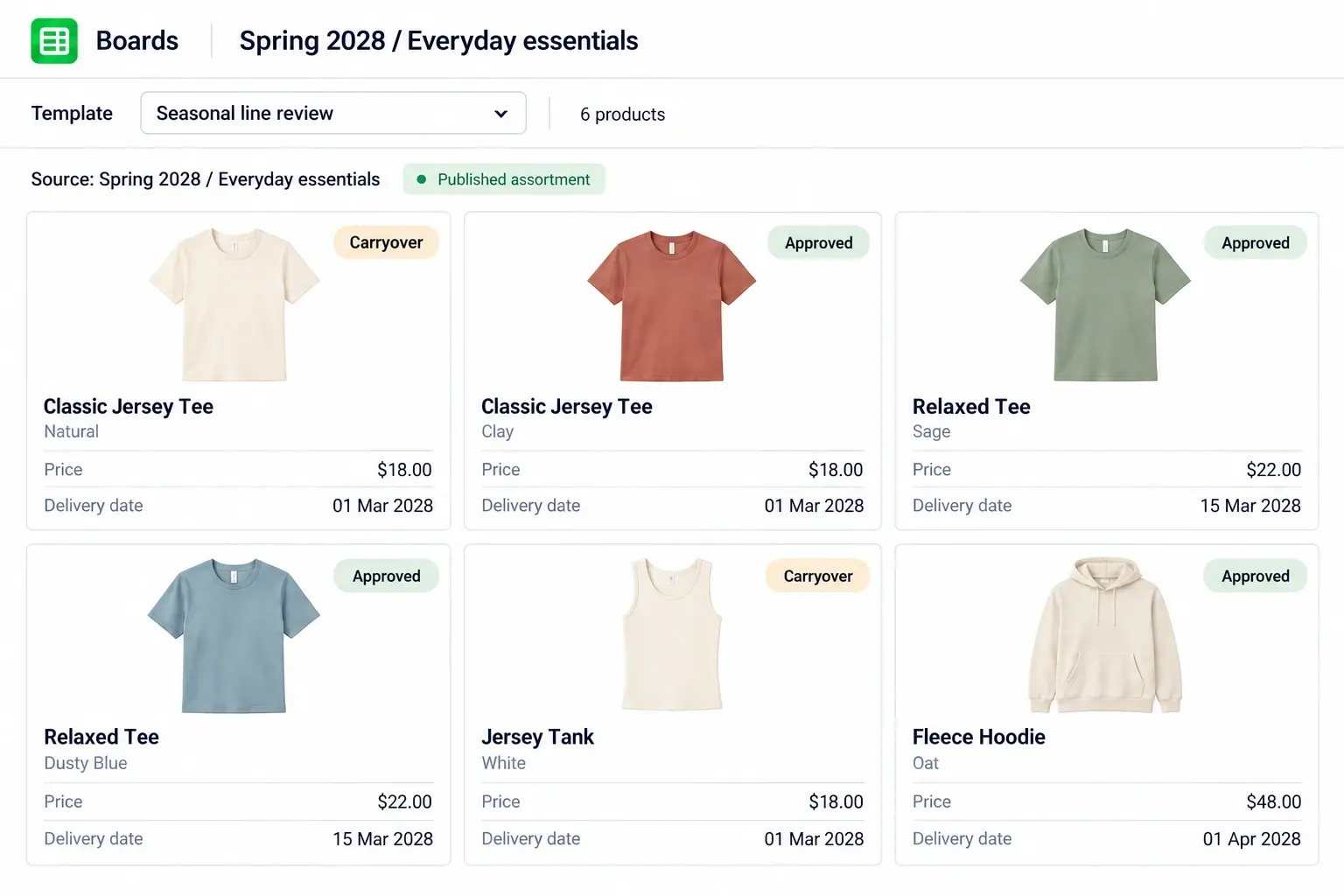
VibeIQ is a product line creation platform. Its Showcase app builds digital line sheets and sell-in presentations from the same product records and assortments merchandising and design use to build the line. Price and product updates can flow into presentation cards, published adds and drops are flagged for review, and teams tailor selections by account, region and channel. Buyers can save the products they select for follow-up, while orders stay in your wholesale commerce system.
Unlike PLM-connected boards, none of this waits for PLM. The visual boards, presentations and the history of decisions behind them live in VibeIQ while the line is still being built, before products exist as PLM records.
Best for: merchandising and sales teams whose line keeps changing between line review and market.
What to compare
- Where the product data comes from. Ask what happens when a colorway is dropped or a price changes. A tool that copies data in once will need rebuilding every time. Ordering platforms such as JOOR and NuORDER sync with live product and inventory data once products are set up in your ERP, so also ask how early in the season that data exists.
- How early you can start. Ask whether sales and regional teams can start building account selections before the line is final, or only once products are fully set up in PLM or ERP.
- Account tailoring. Check how easily you can build account-specific selections and presentations from the same products, without starting a new file for each retailer.
- The buyer feedback loop. Look at what buyers can do with what you send them, and where their picks end up.
- Ordering and payments. If you need order entry, inventory commitments or payments, evaluate those separately and check how they connect to your ERP.
- Visuals and exports. Compare image quality, layouts, video and 360-degree support, and the export formats your sales team actually uses.
“One of the big outcomes of this was being able to focus our design team on actually designing instead of creating presentations.”
Kat Kovac, Print Design & Technology Manager, Vera Bradley
What makes VibeIQ different
Most line sheet tools start once the line is finished. VibeIQ starts where the line is created, so the work behind the line carries straight into selling.
- Built from the line, not copied from it. Line sheets and presentations use the same product records and assortments merchandising and design work in every day, on one shared product data model. There is no export to rebuild.
- Ready before the line is final. Sales and regional teams can prepare account selections while the line is still changing. When products are added or dropped, Showcase flags the change so teams can review it and refresh the affected pages.
- Tailored without starting over. Regional, channel and account selections all come from the shared line, so each version stays connected to the source.
- Story and data together. Pair collection imagery and product stories with linked product details, so buyers see the creative direction and the commercial facts in one place.
- Works alongside your ordering platform. Buyer selections are saved for follow-up, and orders, inventory and payments stay in your B2B platform or ERP.
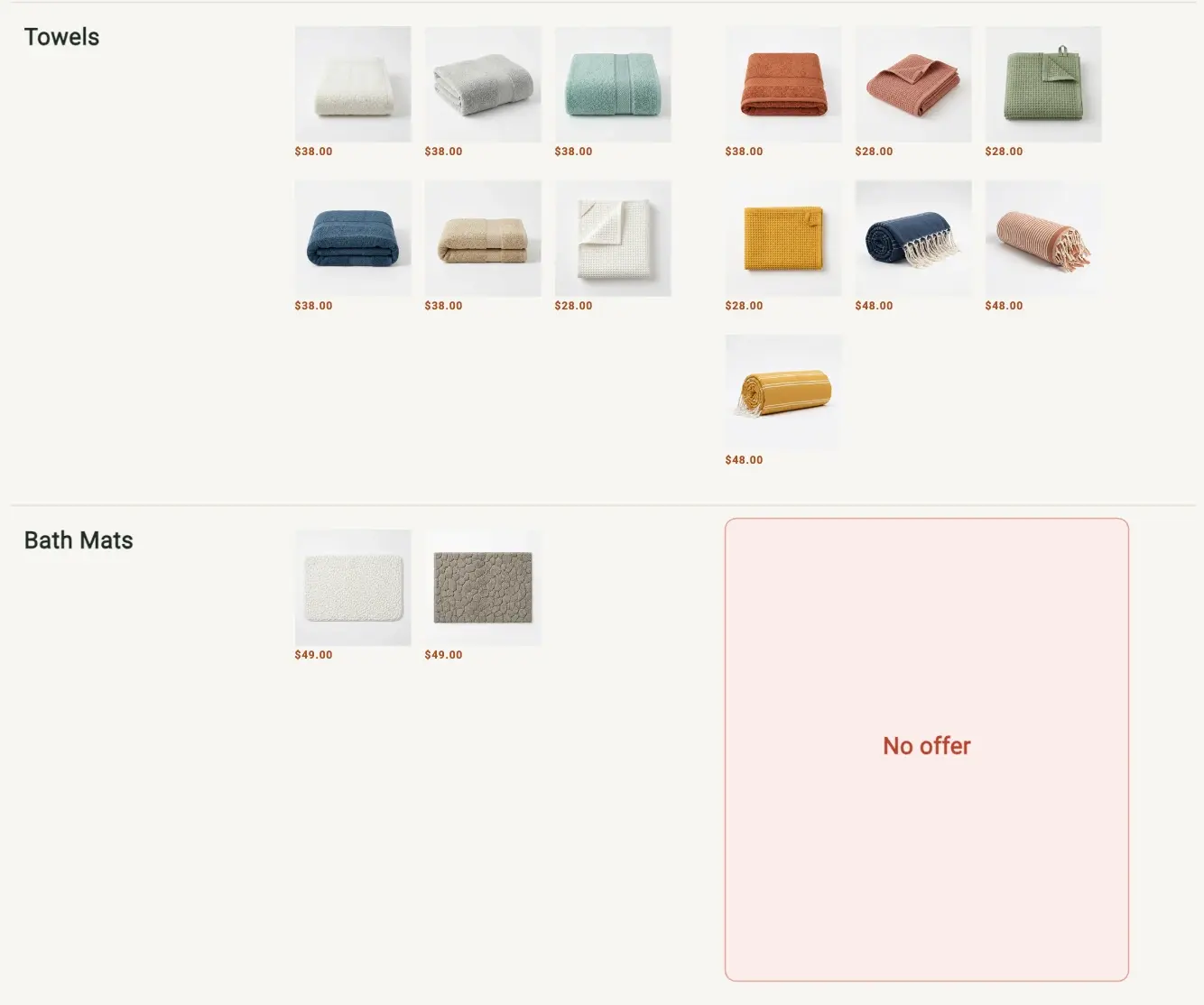
A $4B accessories and ready-to-wear brand that sells 90% through wholesale replaced static sell-in decks with VibeIQ presentations tailored by store and region. Read how it helped drive an estimated $180M increase in wholesale revenue.
After finalizing its line, Kizik cut the time to collect sales-sample requirements from its channel and market teams from four or five days to about 24 hours.
Frequently asked questions
What is the difference between a digital line sheet and a digital showroom?
A digital line sheet presents products with imagery and key commercial details such as style, color and price. A digital showroom is usually a buyer-facing space where accounts browse a collection and, on ordering platforms, place orders.
Do we need both an ordering platform and a line presentation tool?
Not always. Brands with simple, stable lines often manage with an ordering platform alone. Brands whose lines change a lot before market, or who build many account-specific presentations, often add a line presentation tool upstream.
Can digital line sheets update automatically when the line changes?
Only if the tool reads from live product data. In VibeIQ, updates to linked product fields can flow into presentations, and added or dropped products are flagged for review and refresh. Exported files are snapshots and need to be regenerated after changes.
Which digital line sheet tools take wholesale orders?
Of the tools above, Brandboom, Colect, Elastic Suite, JOOR, NuORDER and RepSpark all include order writing. VibeIQ does not take orders. Buyer selections are saved for follow-up, and orders are processed in your wholesale commerce system.
See how your line sheets handle a late change.
Bring a recent line sheet or sell-in deck. We'll show how it would work from a live line, including what happens when a product is added or dropped after it goes out.