If I asked you right now how balanced your line is — could you prove it?
Most merchandising leaders would instinctively say yes.
You know your categories.
You know your price ladders.
You know your winners.
But here’s the harder question:
Do you actually see your assortment — live, fully attributed, and financially connected? Because understanding your line is not the same thing as having true visibility into it. And in today’s environment, that gap quietly drives risk.
The Static Assortment Problem
Most organizations don’t lack data — they lack connected visibility. Instead, the product line lives in fragments:
- Spreadsheets offer numerical structure without visual cohesion
- Decks provide visual storytelling without dynamic totals
- BI dashboards show historical performance disconnected from future plans
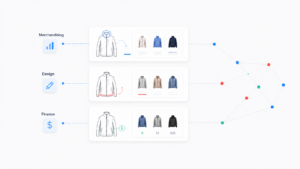
Each tool answers a different question — but none show the full picture. There’s no single environment where you can simultaneously see:
- Visual assortment
- Product attributes
- Margin impact
- Sales history
- Option count
- Category rollups
So leaders are left reconstructing reality through multiple lenses — hoping the composite view is accurate.
The Hidden Consequences of Partial Visibility
When visibility is fragmented, imbalance rarely appears as a dramatic failure. It shows up quietly. You start to see:
- Overlapping silhouettes that dilute differentiation
- Redundant color stories competing for the same customer moment
- Price tier clustering instead of intentional ladders
- Option creep across categories
- Assortments expanding without strategic intent
And these issues don’t just stay aesthetic — they become financial.
Partial visibility contributes to:
- Slower sell-through
- Increased markdown pressure
- Inventory exposure
- Margin erosion
Not because the strategy was wrong — but because the line wasn’t fully seen while it was being built.
The Meeting-Based Alignment Trap
In many organizations, alignment doesn’t come from shared visibility. It comes from meetings. Reviews become the moment where the assortment is “seen” — often through static exports or curated decks.
But this introduces risk:
- Decisions are made from snapshots, not live data
- Financial implications sit outside the visual conversation
- Historical performance rarely informs concept discussions in real time
And ultimately: The strongest presenter can influence direction more than the clearest assortment reality.
A Simple Diagnostic
Ask yourself:
- Can you see live financial rollups while reviewing your line visually?
- Are product attributes consistently tagged and visible across categories?
- Does historical performance inform assortment decisions as they’re being made — not after the fact?
If the answer to any of these is “not really,” you may not have visibility — you may have familiarity.
Real Assortment Confidence Looks Different
True product line confidence doesn’t come from better decks.
It comes from:
- Living visibility
- Fully attributed product views
- Real-time financial connection
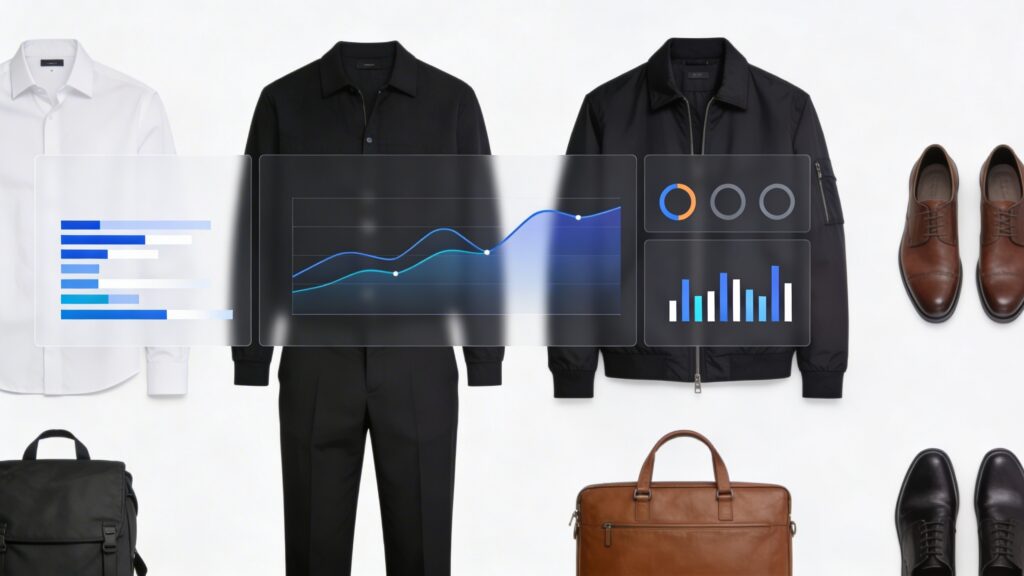
When merchandising teams can see the visual line, the financial impact, and the attribute structure together — decisions shift from reactive to intentional. Balance stops being assumed. It becomes provable. Better decisions start with clearer visibility.
Get a demo of VibeIQ to see how your teams can view assortments live — visually, financially, and strategically — all in one place.