
Merchandising today is more complex—and more consequential—than ever. Consumers expect connected experiences across regions, channels, and categories. Executive teams expect accuracy, agility, and financial consistency. Yet most merchandising organizations are still cobbling together line plans in PowerPoints, PDFs, and spreadsheets that were never built for the speed and collaboration their business demands.
The result? Modern merchandising teams moving at today’s pace with yesterday’s tools.
When assortment decisions are made using outdated files, disconnected documents, and dozens of offline versions, blind spots become inevitable. And those blind spots aren’t just operational inconveniences—they’re expensive, risky, and deeply misaligned with how successful brands operate today.
How Blind Spots Form
Blind spots don’t form because teams lack discipline or experience—they form because the systems they rely on can’t keep up with the pace and complexity of the work.
Disconnected tools create data gaps
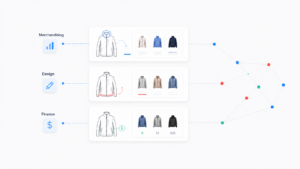
Line plans live in spreadsheets. Visuals live in decks. Comments live in email. Totals live in planning software. No single place tells the whole story, which means every team is managing their own version of the truth.
Regional teams operate on different files
While the global team adjusts top-line strategies, regions are making edits locally. By the time those files come together, no one is certain which version is most accurate—or whether it still reflects the intended product strategy.
Information flow slows as complexity grows
The more categories, regions, stakeholders, and reviews involved, the slower and more fractured the process becomes. Instead of enabling decisions, tools become barriers to collaboration.
These gaps all lead to the same outcome: Merchandising leaders lose visibility into the real-time state of their assortments, making it harder to execute the business the way it should be run.
The Real Business Impact of Working Blind
Blind spots don’t show up in the tools—they show up in the results.
Misaligned assortments
Teams discover too late that categories are over- or under-invested, colors or price points don’t ladder up correctly, or regional needs aren’t reflected in the global line.
Rework and late corrections
Without real-time visibility, adjustments happen after development is in motion—when changes are more expensive and disruptive. Merchants spend more time fixing issues than shaping strategy.
Leadership losing confidence in the line
Executives want clarity: a single, accurate view of the assortment that reflects the strategy they’re accountable for. When the line feels fragmented or outdated, it erodes trust and slows decision-making across the entire organization.
Every blind spot compounds, creating a ripple effect across planning, design, development, and leadership—putting revenue, margin, and efficiency at risk.
How Modern Merch Teams Eliminate Blind Spots
Leading merchandising organizations aren’t solving these challenges with more spreadsheets—they’re redesigning the way information flows.
A single source of truth
All product details, visuals, attributes, and financial data live in one connected workspace. Every stakeholder sees the same line, the same moment, with no version confusion.
Real-time updates tied directly to products
Changes update instantly across teams, presentations, and rollups. No more email chains or “final_final_v6” files. The line evolves in real time, and everyone stays aligned.
Visual-first line planning
Merchandising is visual work—yet most tools aren’t built for visual decision-making. Modern platforms bring product imagery and data together so teams can spot gaps, balance categories, and evaluate the line faster.
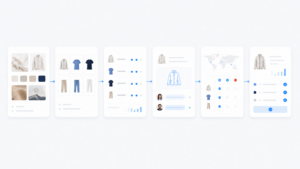
This shift from disconnected documents to connected product data is transforming how merchandising teams make decisions.
The Business Outcomes
When blind spots disappear, the benefits are immediate and measurable.
Faster decisions
Teams move from debating versions to discussing strategy. Reviews happen sooner, not later. Leadership gets the clarity needed to make confident calls.
Better assortment execution
Connected data ensures the line reflects the strategy—from category targets to price points to regionalization. Teams catch issues early instead of correcting them late.
Higher team alignment
With one shared platform, merchandising, design, planning, and leadership stay in sync. Everyone works from the same source of truth, reducing friction and increasing productivity.
This is how high-performing merchandising teams operate: visibly, collaboratively, and with real-time insight driving every decision.
Bringing People, Product Data and Visuals All Together
Modern merchandising requires more than better spreadsheets—it requires an ecosystem built for how product decisions actually get made. A real-time assortment platform like VibeIQ give teams the centralized, real-time visibility needed to eliminate blind spots, accelerate execution, and build assortments that win in the market.
If your team is still navigating a patchwork of disconnected tools, now is the time to explore what a connected assortment workspace can unlock. Get in touch with us for a consultation.