
Line planning is one of the most consequential activities in retail and apparel merchandising.
The decisions made during the line planning process — which categories to invest in, how to balance the assortment across channels and regions, which concepts to carry forward and which to cut, where to direct development resources — determine what the business is capable of bringing to market each season.
They also determine what the business is capable of earning. Assortment structure, investment allocation, and the timing of those commitments are among the most direct drivers of full-price sell-through, inventory risk, and margin performance.
Line planning is, in other words, the core operational activity when the line is still being shaped, and when the decision gap between what those commitments require and what most organizations actually provide is most directly felt.
Given that, it’s worth asking a question most organizations haven’t examined carefully enough: is the way we practice line planning today actually sufficient to support the decisions it’s supposed to inform?
For most retail and apparel brands, the honest answer is no. Not because the teams doing the work are insufficiently skilled or committed. But because the environment in which line planning happens — the tools, the data, the shared context available to the people making those decisions — falls significantly short of what genuinely effective line planning requires.
What Best-in-Class Line Planning Actually Looks Like
Before examining where most organizations fall short, it’s worth being precise about what best-in-class line planning looks like as an organizational capability — because the vision is more concrete than it might initially appear.
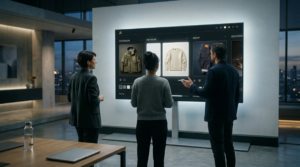
Effective line planning gives every merchant and merchandising leader — from channel and regional merchants to VP-level leaders — a shared, real-time view of the evolving line. Not a periodic snapshot. Not a presentation deck assembled for a review meeting. A live, continuously updated view of the assortment as it takes shape across the organization.
That shared view brings together all of the context that assortment decisions require:
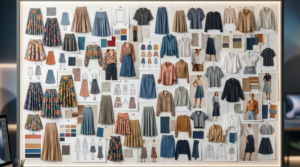
Product visuals and attributes. Merchants should be able to see what products actually look like — not just how they are described in structured data fields — and evaluate them in the context of the full assortment as it’s currently forming.
Historical and in-market sales data. The performance of past assortments and current in-season selling should be immediately accessible and connected to the products being planned — not sitting in a separate analytics platform that requires additional synthesis to apply.
Line plan data. Style counts, open-to-buy allocations, category architecture, price tier distribution — the structural framework of the assortment — visible and up to date at all times.
Consumer insights. Demand signals, trend data, and consumer preference indicators connected to the actual products and categories being planned — not evaluated separately from the line planning process.
Critically, that view should be interrogable from any angle, at any moment. A regional merchant should be able to evaluate the assortment through the lens of their market. A channel merchant should be able to filter by their channel’s specific requirements. A VP of Merchandising should be able to examine the full line by category, colorway, intro date, gender, price tier, or any other dimension — and shift between those lenses fluidly as the line evolves.
And every one of those views should reflect the same real-time reality of the assortment — so that every merchant and every merchandising leader is working from the same picture, at the same moment, regardless of where they sit in the organization. That is what line planning should be. For most organizations today, it is not what line planning is.
What Line Planning Actually Looks Like in Most Organizations
In practice, the line planning environment at most retail and apparel brands looks significantly different from the vision above.
Product visuals live in design tools and creative systems that are separate from the line planning process. Historical sales data sits in analytics platforms that require separate access and additional work to connect to current planning decisions. Consumer insights are analyzed in isolation — discussed in trend reviews and strategy sessions, but not connected to the actual products and categories being planned in real time. Line plan data lives in spreadsheets or planning systems that track structure and financial targets but don’t show the visual and creative reality of the assortment evolving alongside them.
Each of these inputs exists. But they exist in separate places, managed by different teams, updated on different cadences, and synthesized — when they are synthesized — through the manual effort of individuals rather than through a shared environment that brings them together automatically.
The result is that line planning, in most organizations, is not a continuous shared practice. It is a periodic alignment exercise — a series of review cycles where teams assemble their respective views of the line, present them to each other, and attempt to build shared understanding across disconnected information sources under deadline pressure.
The Review Cycle as a Substitute for Real-Time Visibility
The line review has become, in many organizations, the primary mechanism through which merchandising achieves the shared visibility that line planning should provide continuously.
Teams prepare materials — plan exports, presentation decks, visual boards — that represent the assortment as it stood when those materials were assembled. Leaders review those materials, make decisions, and provide direction. The process moves forward until the next review cycle, when the exercise repeats.
This approach has a fundamental limitation that no amount of process discipline can overcome: by the time the materials are prepared and the review happens, the underlying assortment has continued to evolve. Decisions are made against a picture that is already, to some degree, out of date.
More significantly, the review cycle approach means that shared visibility exists only at fixed intervals — at the moments when teams have assembled their materials and gathered in the same room or the same meeting. Between those moments, each team works from their own view of the line, making decisions and advancing work without the shared context that would allow those decisions to be evaluated consistently. This is the midstream phase operating below its potential — not because the people are wrong, but because the environment doesn’t support them.
What the Gap Costs
The distance between what line planning should be and what it is in practice carries costs that show up across the season in ways that are individually manageable but cumulatively significant — and that connect directly to the three costs that originate in the decision gap.
Operating Cost accumulates through decisions made without the full picture. When product visuals, sales data, consumer insights, and line plan data exist in separate places rather than a shared environment, leaders make assortment commitments without complete context. Products advance that would have been redirected with fuller visibility. Redundancies that a real-time shared view would surface immediately persist through multiple review cycles before they are caught. Gaps that historical data would identify remain unaddressed because that data isn’t connected to the planning process when it matters.
Speed Cost compounds as confidence forms more slowly than it should. When the picture available at the decision moment is incomplete and fragmented, conviction takes longer to build. Leaders seek additional confirmation. Decisions are delayed or made conservatively because the context required to make them confidently isn’t immediately accessible. The organization commits to opportunities later than it should — and the financial consequences of that lateness accumulate across the season.
Sell-through is limited by alignment that arrives too late. When different members of the merchandising organization are working from different views of the line — regional merchants with their regional lens, channel merchants with their channel lens, central merchandising with their financial lens — alignment requires active assembly. It doesn’t emerge naturally because a shared environment doesn’t exist. Conflicts and misalignments surface at the moments when they are most expensive to resolve, and the assortment that ultimately goes to market reflects the limits of what the organization could see and agree on — not the full scope of what was possible.
Why More Data Hasn’t Closed the Gap
For organizations that have invested in richer data environments — more analytics capability, more performance reporting, more AI-generated signals entering the planning process — it might seem that the gap between what line planning should be and what it is in practice should be narrowing.
In many cases, it hasn’t. And understanding why matters.
More data improves the quality of individual inputs available to merchandising teams. It does not change the structural environment in which line planning happens. Historical performance data in an analytics platform, trend signals surfaced by an AI tool, demand projections from a forecasting system — each has potential value. But each exists outside the line planning environment, requiring additional synthesis before it can inform the decisions being made within it.
When data sources multiply without a shared environment to bring them together, the cognitive burden on individual merchants and leaders grows. More inputs to synthesize. More systems to navigate. More versions of the assortment to reconcile before a coherent picture emerges.
More data without a shared environment doesn’t close the gap. It can widen it — adding complexity to the decision moment without improving the clarity it requires. This is the same dynamic that explains why AI investments concentrated upstream or downstream of the midstream phase don’t address the line planning problem: better inputs into a fragmented environment don’t produce a less fragmented environment.
What Closing the Gap Actually Requires
Closing the gap between what line planning should be and what it is in practice is not primarily a data problem or a technology problem. It is an organizational capability problem — specifically, the capability to govern the midstream phase.
It requires building the environment where line planning actually happens — not where its outputs are presented after the fact. That environment needs to bring product visuals and attributes, historical and in-market sales data, consumer insights, and line plan data together in a single place — continuously updated, not periodically assembled — and make it genuinely shared, in real time, across every level of the merchandising organization.
When that capability exists, the character of line planning changes. Decisions are made with the full picture. Alignment emerges from shared visibility rather than being forced through review cycles. Confidence forms earlier because the context confidence requires is immediately accessible rather than manually assembled under deadline pressure.
And the competitive consequence is equally significant: organizations that govern the midstream phase well — where line planning is a continuous shared practice rather than a periodic event — consistently make better assortment decisions earlier. They bring more relevant product to market faster. And they do it with less rework, less inventory risk, and more of the season’s opportunity captured at full price.
That is what best-in-class line planning makes possible. For most organizations, it remains the capability that hasn’t yet been built — and the one most directly connected to the merchandising outcomes that matter most.
About VibeIQ
If the gap between the vision described in this piece and your organization’s current reality felt familiar, that recognition is worth taking seriously. Most VPs of Merchandising already know their line planning falls short of what it should be. What’s less clear, in most organizations, is what the path from here to there actually looks like — and who specifically builds the environment that makes it possible.
VibeIQ is purpose-built for these phases of the go-to-market process — the shared environment where merchandising, design, and product teams evaluate the evolving line together, in real time, with all relevant context visible and interrogable from any angle. It is where line planning becomes a continuous shared practice rather than a periodic alignment exercise — and where the decision gap closes before commitment locks.
If you’re ready to examine what that looks like for your organization, we’d welcome the conversation.