
There’s a moment every global merchant recognizes.
A season is already underway when the signal appears: margin is off in a key category; a region flags inventory risk; a product that looked promising underperforms. Suddenly, the team scrambles. Emergency meetings are scheduled. New decks are built. Scenarios are debated. Everyone is working hard to fix the problem.
And in the middle of it all, a quiet realization hits:
We could have seen this earlier.
But now:
- Designs are locked.
- Inventory is committed.
- Timelines are fixed.
- Budgets are spent.
By the time the issue becomes visible, the window to meaningfully fix it has already closed.
This is the Global Merchant trap — the feeling that you’re constantly discovering problems at the exact moment you’ve lost the ability to change them.
The Role Was Meant to Be Proactive
On paper, the role of the global merchant is strategic.
You’re expected to:
- Shape assortment strategy.
- Anticipate demand.
- Balance creative vision with commercial outcomes.
- Optimize the line before execution begins.
You’re supposed to design the future of the business. But in practice, the job often feels very different.
Instead of planning, you’re:
- Reacting to performance.
- Managing late-stage issues.
- Running emergency reviews.
- Making decisions when options are already constrained.
The role is built for foresight. The system forces hindsight.
The Illusion of Control
Most merchandising teams feel like they’re planning because they:
- Run line reviews.
- Build detailed presentations.
- Approve assortments.
- Lock decisions in meetings.
It feels structured. It feels deliberate. It feels strategic. But look closer at what’s actually happening.
Line reviews are based on:
- Static snapshots of data.
- Visuals that lag behind reality.
- Financial context pulled from separate systems.
- Versions of the line that are already outdated.
Teams aren’t really planning for the future. They’re approving a version of the past.
By the time insights surface — about margin risk, regional misalignment, or demand shifts — the business has already moved forward. The opportunity to shape outcomes has passed. All that’s left is reacting.
Where Line Plan Reactivity Really Comes From
Reactivity isn’t a mindset problem. It’s a system problem.
Late Line Plan Visibility
Critical insights only appear after:
- Decks are built.
- Reviews are completed.
- Decisions are considered “final.”
Financial risk, performance signals, and operational constraints show up downstream — when flexibility is already gone.
Static Line Presentations
Line planning still happens inside:
- PowerPoint decks.
- PDFs.
- Screenshots.
- Spreadsheets.
These tools can’t update in real time. They can’t model scenarios. They can’t reveal trade-offs as they happen.
They freeze the product line at a moment in time — even though the business never stops moving.
Decisions Live Outside the System
Most decisions are made:
- Verbally in meetings.
- In notes and follow-ups.
- In email threads.
- In side conversations.
Nothing actually changes in the system of record. The real work happens after the review.
Manual Reconciliation
Post-meeting, teams rush to:
- Update files.
- Sync tools.
- Rebuild visuals.
- Interpret what was decided.
By the time the system reflects reality, the opportunity for proactive planning is gone.
The Cost of Seeing the Product Line Too Late
At first, reactivity feels manageable. It’s just part of the job. Over time, it becomes a strategic liability.
Business Impact
- Late assortment changes.
- Excess inventory or stockouts.
- Margin erosion.
- Missed optimization opportunities.
Strategic Impact
- Planning becomes short-term and defensive.
- Teams operate in firefighting mode.
- Leadership loses confidence in forecasts.
- Strategy turns into damage control.
Reactivity doesn’t just slow the business. It permanently limits what the business can become, because when you’re always fixing problems, you’re never truly designing outcomes.
Line Planning Happens at the Point of Minimum Leverage
This is the heart of the problem.
Global merchants aren’t reacting because they lack insight or discipline. They’re reacting because the system only reveals truth when it’s already expensive to change it.
Planning should happen:
- When scenarios are still flexible.
- When trade-offs are visible.
- When risk is still theoretical.
- When decisions can still shape outcomes.
Instead, insight arrives when:
- Options are constrained.
- Costs are locked.
- Timelines are fixed.
- The season is already in motion.
Most line planning happens at the point of minimum leverage — when the business has the least ability to adapt.
What Proactive Line Planning Actually Looks Like
Proactive line planning feels fundamentally different.
A proactive global merchant can:
- See the full product line early.
- With visuals and financials together.
- Explore scenarios in real time.
- Test assortment changes.
- Compare price tiers.
- Understand margin impact instantly.
- Identify risk before it becomes reality.
Not reacting to performance. Not fixing problems, but designing outcomes upstream. In this world, line reviews aren’t approvals. They’re exploration sessions.
From Reactive Merchandising Mode to Proactive Mode
The difference between reactive and proactive merchandising isn’t effort.
It’s timing and visibility.
Reactive Merchandising Mode:
- Static reviews.
- Late insights.
- Verbal decisions.
- Manual updates.
- Downstream fixes.
Proactive Merchandising Mode:
- Live visual line.
- Real-time metrics.
- Scenario modeling.
- Decisions in-system.
- Upstream optimization.
When teams operate in proactive mode, they don’t move faster because they rush. They move faster because they finally see early enough to decide well.
Where VibeIQ Fits for Global Merchants
This is exactly the shift VibeIQ is designed to enable.
VibeIQ gives global merchants:
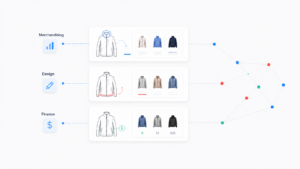
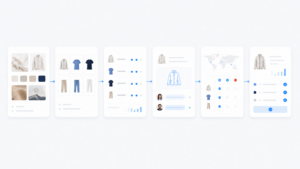
- A live, visual view of the product line.
- Real-time integration of product data and financial metrics.
- Dynamic pivots by region, category, price, or margin.
- Scenario exploration inside a single system.
- Decisions captured and reflected instantly.
Instead of discovering problems late, teams can prevent them early. Instead of reacting to outcomes, they can shape them. Instead of fixing issues downstream, they can design success upstream. VibeIQ doesn’t help merchants work harder. It helps them see sooner — and decide while it still matters.
Escaping the Global Merchant Trap
So why do global merchants only see the problem when it’s too late to fix it?
Because most merchandising systems were built to:
- Document decisions.
Not to:
- Enable them early.
The Global Merchant trap isn’t lack of talent. It’s lack of early visibility and real-time decision infrastructure. And the teams that escape it aren’t more disciplined. They’re simply operating with a system that lets them plan when it still makes a difference.
Get in touch with VibeIQ to learn how your teams can avoid the ‘trap’ and become more proactive.