PLM is essential.
It’s the system of record for product development. It ensures execution is structured, traceable, and scalable. It manages technical specs, costing, sourcing, compliance, and timelines — all the mechanics required to bring a product to life.
But PLM was never designed to answer the earliest and most important questions in merchandising:
What should we build?
Why should we build it?
How should the line come together?
By the time a product reaches PLM, those questions have already been answered — often informally. And that’s where a structural gap begins.
What PLM Does — And Doesn’t Do
PLM excels at managing downstream complexity. Once a product concept is defined, it brings discipline to execution through:
- Technical specification management
- Costing and bill of materials
- Development tracking
- Compliance oversight
- Supplier collaboration
It’s optimized for operational clarity.
But upstream merchandising isn’t an operational process. It’s a strategic one. It involves exploration, iteration, trade-offs, and alignment across creative, commercial, and financial perspectives. And that kind of work rarely fits neatly into structured development systems.
Where Merchandising Actually Happens
In practice, most merchandising decisions take shape long before anything enters PLM — and they happen across a patchwork of tools never intended for this purpose.
Concepts evolve in spreadsheets.
Line direction is debated in slide decks.
Assortment structures are sketched in Miro boards.
Trade-offs happen in email threads.
Critical decisions are made in conversations that never live in a system at all.
This is where assortments are shaped. Where pricing ladders are tested. Where option counts are negotiated. Where financial targets collide with creative ambition.
Yet none of these environments were designed to support merchandising as a discipline. They’re improvised workspaces.
The Upstream Gap
The result is a structural blind spot in how product organizations operate. There is no dedicated environment for the phase where product direction is defined.
No system where teams can:
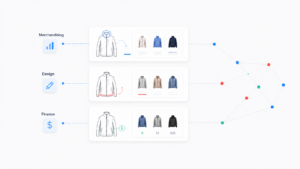
- Iterate on concepts visually while understanding financial impact
- Review assortment balance in real time
- Align cross-functional stakeholders around a shared view of the line
- Evolve strategy dynamically as decisions are made
Instead, the most strategic phase of the lifecycle exists outside the systems that govern everything else.
By the time PLM takes over, many of the highest-impact decisions are already locked in — often without the benefit of shared visibility or connected data.
A Shift in How Merchandising Happens
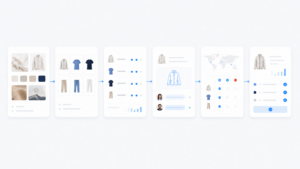
Modern merchandising requires more than tools for execution. It requires a workspace for definition. A place where teams can collaboratively answer the “what” and “why” of the product line before committing to the “how.”
Where visual direction, financial intent, and assortment structure can evolve together — not in isolation. Because the earlier decisions are made with clarity, the stronger the downstream execution becomes. And the sooner teams move from improvisation to shared structure, the more intentional their product strategies can be.
Get a demo of VibeIQ to see how merchandising teams can work upstream — before development begins — in a connected, collaborative environment with access to real-time product visuals and real-time product data.