
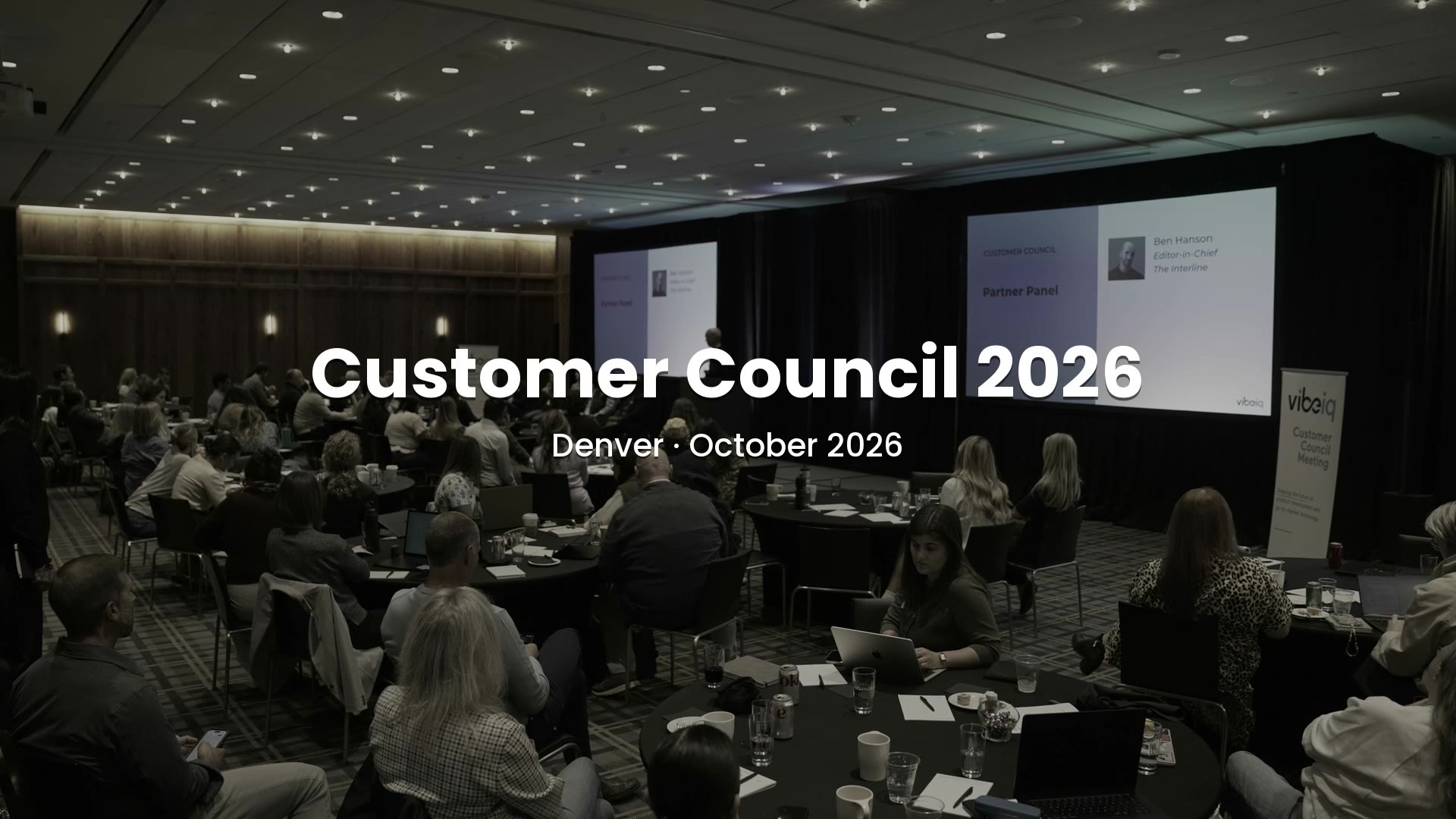
On October 20–21, 45 product leaders from footwear, apparel and consumer goods brands spent two days with us in Denver. We co-hosted with Ben Hanson, Editor-in-Chief of The Interline, and kept the agenda simple: talk candidly about where product creation is changing, where AI is becoming real, and where teams are still stuck.
This post covers the highlights. The full Customer Council recap has every roundtable in detail.
Why we keep the room small
The Council is deliberately small so that people can speak openly. Around the tables were VPs of design, merchandising and planning directors, product development directors, product creation technology leaders, design systems and product data leads, and transformation managers.
What people valued most was hearing that other teams are working through the same problems.
“The best part of coming to these type of events is the networking… understanding that you’re not alone in this industry.”
Jennifer Bonanni, Digital Product Manager, New Balance
“Just because you’re a bigger company doesn’t mean you have it figured out. But to be able to kind of collaborate on some of that has been really helpful.”
Michele Mesmer, Director of Merchandising, Malbon Golf
Five themes that came up at every table
Each roundtable had its own question, but the same five needs kept coming back:
- Commercial decisions inside the line. See margin, forecast, history and targets next to the assortment, and test scenarios on the spot.
- Connected systems. Keep data consistent across PLM, planning tools and spreadsheets without re-keying it.
- Decision history. Know what changed, why and who decided, with feedback that follows the product.
- Less admin, more craft. Spend less time updating attributes, rebuilding presentations and tidying boards.
- Practical, trustworthy AI. AI that takes on repetitive work and supports decisions, with governance built in.
Four moments that stuck with us
50–60% of one brand’s line can change about three weeks before commercialization, driven by late leadership calls.
About 10 hours of added work one design team attributes to AI, now that leaders expect fully rendered concepts instead of flats.
The #1 barrier named by transformation leaders was change management, not technology.
Every hop between systems makes data less reliable. Aligning data models is harder than building the integration.
AI’s gap is trust, not adoption
Ben Hanson opened with findings from The Interline’s 2026 survey of fashion professionals:
- 73% see the biggest risk as decisions made on inaccurate information.
- 27% trust AI enough to base a critical choice on its output.
- 65% of AI projects are sandboxed or standalone, cut off from business data.
- 24% have a good rubric for judging the return on AI.
The roundtables echoed it. Teams want one sanctioned tool rather than “shadow AI”, defined use cases with benchmarks, and agents connected to PLM and product data. AI earns trust when it is grounded in your product data and connected to the systems where decisions get made.
Source: The Interline, The AI Report 2026, a survey of around 100 fashion professionals.
Hear it from the customers
We also recorded short interviews with attendees from Xero Shoes, Malbon Golf, Rifle Paper Co., Carter’s and New Balance. Each one is under a minute. Watch them on our customers page, alongside a clip from Vera Bradley.
The big takeaway
Teams want one connected place to create, evaluate and decide on the product line, earlier. Not to replace planning or development tools, but to make them work together around real product decisions.
Thank you to every brand in the room. If you’d like to bring your team in 2027, or map these themes to your own roadmap, book a working session with us.