
When forecasts miss, finance is usually the first place organizations look. The assumption is that projections were off, assumptions were flawed, or models weren’t refined enough. But in many cases, the math isn’t the real problem. The breakdown starts much earlier — long before numbers ever reach a spreadsheet.
Forecast accuracy is shaped upstream, during the earliest stages of line planning. By the time finance begins building projections, many of the most important inputs have already been set in motion through assortment decisions, category investments, and product direction. If those early inputs are incomplete, outdated, or unclear, forecasting becomes an exercise in managing uncertainty rather than predicting outcomes.
For VPs of Merchandising, this creates a quiet but significant risk. You’re not just responsible for shaping the line — you’re accountable for revenue performance, margin outcomes, and category balance. When early visibility is limited, forecasts are built on assumptions that may not fully reflect reality.
Where forecast risk really begins
Forecasting doesn’t start in finance. It starts when the assortment begins to take shape.
Every early decision influences what the business will eventually expect to deliver:
- How much depth goes into key categories
- Where pricing tiers concentrate
- How balanced the assortment becomes
- Where revenue potential is strongest
These decisions form the foundation that financial projections rely on. But at this stage, information is often scattered. Product details live across multiple decks, tools, and versions. Line views change quickly as teams iterate. Reporting lags behind what’s actually being built.
Leaders are forced to make directional calls without a full, current picture.
No single moment feels risky. But the uncertainty begins to accumulate.
How incomplete assortment data quietly weakens forecasts
Forecast risk doesn’t usually appear all at once. It builds gradually from small gaps in visibility early in the process.
A category may grow heavier than originally planned.
A price tier may become overrepresented.
An investment decision may shift the balance of the line.
When visibility into these changes is delayed, early assumptions start to harden into planning inputs. Teams begin building projections based on partial views. As the process moves forward, those assumptions get embedded into forecasts that become harder to adjust.
By the time inconsistencies surface, the line direction may already be established and key commitments made.
This is when the pattern begins:
- Revenue projections need to be explained and re-explained
- Margin expectations shift mid-cycle
- Category performance surprises emerge late
- Re-forecasting becomes routine
For leadership, the impact is tangible. Confidence in projections becomes harder to maintain. Defending targets requires more context and explanation. And decisions that once felt strategic begin to feel reactive.
Forecast risk doesn’t suddenly appear — it accumulates quietly from early uncertainty.
The timing problem behind forecasting accuracy
Forecasting is often treated as a precision problem. In reality, it’s a timing problem.
The longer teams operate without clear visibility into the evolving assortment, the more assumptions take hold. The longer those assumptions go unchallenged, the more deeply they shape projections.
By the time reporting catches up:
- Investments are already allocated
- Assortment direction is largely set
- Flexibility is limited
At that point, even small adjustments can feel disruptive. Course correction becomes harder, slower, and more expensive.
Improving forecast accuracy isn’t just about refining models. It’s about strengthening the quality of inputs earlier, when change is still possible.
Why clearer visibility into the line changes forecast quality
When merchandising leaders can clearly see how the line is taking shape in real time, forecasting becomes grounded in reality much earlier.
With better visual visibility into the assortment, leaders can quickly spot:
- Category imbalances forming
- Gaps in assortment depth
- Over-concentration in certain price bands
- Areas where investment may be outpacing opportunity
These insights allow for faster, more informed decisions while the line is still fluid. Instead of reacting to surprises later, leaders can guide direction earlier.
That shift has a compounding effect. Better visibility leads to better inputs. Better inputs lead to stronger projections. And stronger projections lead to more confident planning across the organization.
Forecast accuracy improves not because the math changes, but because the assumptions behind it become more grounded.
What changes when decisions happen earlier
When merchandising teams have clearer, more current visibility into the line, alignment happens sooner and decisions move faster.
Leaders can:
- Catch risks before they become embedded in projections
- Adjust category investment earlier
- Strengthen alignment between product direction and financial expectations
- Move forward with more confidence
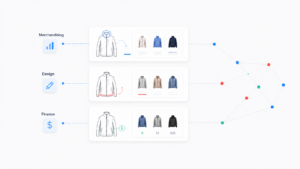
The organization benefits as well. There’s less need for late-stage rework, fewer surprises during major reviews, and stronger alignment between merchandising, design, and finance.
Instead of constantly reacting to shifts, teams can operate more proactively, with a shared understanding of where the line is headed.
Bringing stronger inputs into the forecasting process
This is where streamlined visual line planning and reporting can make a meaningful difference.
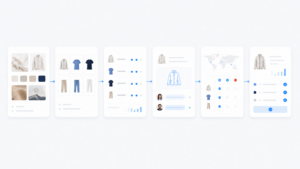
When assortment data is centralized, current, and easy to understand, leaders stay connected to how the line is evolving in real time. Instead of waiting for periodic updates, they can see changes as they happen and make decisions based on a more complete picture.
That visibility allows VPs of Merchandising to:
- Make better, more informed decisions earlier in the go-to-market process
- Move faster with greater clarity
- Strengthen the quality of inputs forecasts depend on
Forecast accuracy doesn’t just improve at the end of the process. It improves at the beginning, when the most important assumptions are still being formed.
The executive takeaway
Forecasts don’t fail because of a single miscalculation. They weaken over time when early decisions are made without full visibility.
For merchandising leaders, the challenge isn’t just predicting what will happen. It’s ensuring the inputs shaping those predictions are grounded in the most complete, current understanding of the line possible.
The earlier leaders can see how the assortment is forming, the faster they can make informed adjustments. And the faster those decisions happen, the more reliable the forecasts become.
Forecast accuracy starts with stronger inputs. And stronger inputs come from earlier visibility into how the line is actually taking shape.
Stronger inputs earlier lead to more confident forecasts later. Get in touch with VibeIQ to learn how your teams can improve forecast accuracy by making better, more informed decisions earlier in the go-to-market process.