
In retail and apparel, speed to market is often treated as the primary driver of competitive advantage.
Brands compress go-to-market calendars. Development cycles are accelerated. Teams are pushed to move faster each season. The logic is straightforward: the closer a company can get to the consumer, the better it can capture emerging demand.
But in many organizations, the real constraint on revenue is not execution speed.
It’s decision timing.
Even when the right product opportunities are identified, organizations often commit to them too late to fully capitalize on market demand. By the time conviction arrives, the window of opportunity has already begun to close. Initial buys are set conservatively. Assortments are narrowed. Products that could have driven the season are introduced with limited scale — not because the opportunity wasn’t real, but because the organization ran out of time to act on it fully.
This is the specific mechanism through which the decision gap costs revenue. Not through bad judgment. Not through weak products. Through timing.
And as AI and process improvements accelerate execution across the product creation lifecycle, the cost of late decisions doesn’t shrink — it grows. The rest of the organization moves faster toward a destination that was set too late to fully capitalize on.
Why Timing Matters in the Product Creation Process
Consumer markets move quickly. Trends emerge, gain momentum, and fade within increasingly compressed cycles. Brands that can recognize those shifts early — and commit resources to the right products — are able to scale opportunity while demand is still growing.
Early conviction allows organizations to:
- Invest more aggressively in winning products
- Secure production capacity before it becomes constrained
- Expand assortments around emerging trends while momentum is building
- Maximize full-price selling windows before the market moves on
Early decisions create room for growth. Late decisions do the opposite — they compress the room available, forcing the organization to make smaller bets on the same opportunities it already believed in.
Revenue Opportunities Shrink as Time Passes
When product decisions arrive late in the product creation process, the opportunity space begins to narrow — not because the market has moved on, but because the organization no longer has the time to act on its own conviction.
Development windows become compressed. Production capacity becomes constrained. Inventory commitments must become more conservative because the margin for course-correction has disappeared.
Even when teams believe strongly in a product concept, they often lack the time required to scale it properly. Instead of leaning into opportunity, organizations are forced to limit exposure. Initial buys shrink. Assortments narrow. Products that might have driven meaningful revenue are introduced cautiously rather than confidently.
The opportunity still exists. The organization is simply no longer positioned to capture its full value.
This is the quiet mechanism through which timing caps revenue — not through a single dramatic miss, but through a season’s worth of cautious adjustments that each feel responsible in the moment and collectively leave significant upside on the table.
Why Product Decisions Often Happen Later Than Intended
Few organizations intentionally delay important product decisions. In most cases, the delay occurs because leaders lack the context needed to commit confidently.
At the moment when decisions are required, leaders are often evaluating fragmented information:
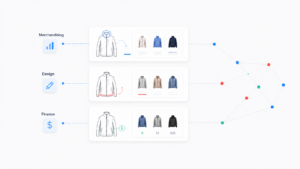
- Product concepts evolving across design tools
- Line plans managed in spreadsheets
- Historical sales data living in separate analytics systems
- Trend insights discussed independently of the actual assortment
Without a clear view of how the product line is forming, decision-making becomes more difficult. Leaders hesitate — not because they lack conviction about the market, but because they lack the visibility needed to translate that conviction into confident resource commitments.
This is the core dynamic of the decision gap: the phase between creative exploration and operational execution is the moment where timing is still improvable. It is also, for most organizations, the phase with the least structure, the least shared context, and the least decision support.
That combination — high stakes, low visibility, no governing system — is why decisions arrive later than intended. And why the revenue consequences compound quietly across the season.
Why AI Point Solutions Don’t Solve the Timing Problem
Many of the AI tools entering the retail market are designed to accelerate discrete tasks — generating concept variations, analyzing trend data, producing design outputs. They are useful in their lane. But they operate in isolation from one another and from the actual decision process.
They can accelerate the inputs to a decision without improving the decision itself. Leaders still find themselves looking across disconnected sources — some AI-generated, some not — trying to synthesize a complete picture that no single tool provides. The fragmentation that causes late decisions doesn’t disappear. It simply moves faster.
The same limitation applies to AI applied downstream — to forecasting, pricing, and inventory optimization. These systems are valuable, and they are getting better. But they come into play after product direction has already been set. They improve how efficiently an organization manages the consequences of its decisions. They cannot change the timing of those decisions.
Confidence requires context. And context, for most organizations today, remains scattered across the exact phase where timing matters most.
Waiting for Certainty Delays Opportunity
In uncertain environments, it’s natural for leaders to seek additional confirmation before committing resources. Waiting for stronger data, clearer signals, or more refined concepts can feel like responsible risk management.
But consumer markets rarely reward waiting. By the time certainty arrives:
- Competitors may have already committed to the same opportunity
- Production windows may have narrowed or closed
- Trend momentum may have shifted toward the next cycle
What began as a prudent pause quietly becomes a lost opportunity. Organizations that wait for perfect clarity often find themselves reacting to demand rather than shaping it — arriving at the right answer just late enough to capture only a fraction of its value.
How Late Decisions Quietly Limit Revenue Capture
Delayed decisions rarely appear dramatic in the moment. There is no single meeting where an executive announces the season will be constrained. Instead, the impact accumulates through a series of cautious adjustments, each made individually and each entirely understandable.
Initial buys become smaller. Assortments become narrower. Investment in emerging trends becomes more conservative. These choices feel like prudent risk management. They are, in aggregate, a cap on revenue potential.
Products that might have driven significant revenue are introduced with limited scale. Opportunities that could have defined the season become incremental additions to the line. The organization protects itself from downside — and limits its ability to capture growth.
Each of these adjustments is also a cost. The time-to-market cost is real: limited scale means limited ability to build momentum while demand is still growing. The operating cost compounds: smaller buys and tighter assortments often mean less efficient use of production capacity and development resources. And the sell-through consequence follows: a cautious assortment built under time pressure rarely outperforms a well-timed, confidently scaled one.
All three costs trace back to the same origin point — the timing of the decisions made in the decision phase, before commitment locked and optionality disappeared.
Late Conviction Leads to Conservative Investment
Confidence drives investment. When leadership believes strongly in a product direction early enough, organizations can scale that conviction through development, production, and launch. The assortment reflects the opportunity, not the constraint.
But when confidence arrives late, investment decisions shift. Organizations default to safer product mixes, incremental updates to proven categories, and limited bets on emerging demand. The result is an assortment designed to perform predictably rather than capture opportunity aggressively.
Revenue potential becomes capped — not by consumer demand, which may be strong, but by the timing of internal decisions that determined how much of that demand the organization was positioned to pursue.
Why Speed Alone Doesn’t Solve the Timing Problem
When organizations recognize they are moving too slowly, the typical response is to accelerate execution. Development calendars are compressed. Teams are pushed to move faster. Processes are streamlined to reduce cycle time.
Speed becomes the focus. But faster execution cannot correct late decisions. If product conviction still arrives late in the process, accelerating development simply pushes those same constrained decisions forward more quickly. The organization moves faster — toward the same limited outcomes.
The timing problem does not originate in how fast teams move. It originates in the decision phase — in the absence of the shared context, visibility, and decision support that would allow leaders to commit confidently earlier. Compressing calendars doesn’t change that. It just reduces the already-limited time available to resolve it.
Speed Amplifies the Quality of Decisions Already Made
Speed is a powerful advantage when it follows clear, well-timed decisions. When product conviction forms early, faster go-to-market cycles allow organizations to scale opportunity and capture demand sooner. Speed, in this context, becomes a genuine force multiplier.
But when decisions arrive late, speed magnifies the constraint. Products still reach the market quickly, but they do so with limited scale, cautious investment, and reduced opportunity. Speed amplifies what was already decided — for better or worse.
This is what makes timing such a consequential variable. It doesn’t just determine how much of an opportunity is captured. It determines how much of the organization’s execution capability — its speed, its production capacity, its investment firepower — can be deployed against that opportunity at all.
The real competitive advantage is not speed in isolation. It is the speed at which an organization can reach well-informed conviction — closing the decision gap quickly enough to act on opportunity while it is still fully available. That is what separates brands that consistently capture demand from those that consistently arrive at the right answer just slightly too late.
Rethinking Decision Timing in Product Creation
For enterprise retail and apparel brands, revenue growth depends on more than efficient execution. It depends on when the organization is able to commit to the right products — and how much of the opportunity that timing leaves intact.
Brands that can evaluate emerging opportunities clearly and commit earlier gain the ability to invest more confidently in winning products, scale assortments around demand while it is still building, and align production capacity with real market opportunity. The timing advantage compounds across the season.
Improving decision timing is not primarily an execution challenge. It is a visibility and alignment challenge — one that requires merchandising, design, and product teams to share a clear, current view of the evolving product line at the exact moment decisions must be made.
This is the problem the decision gap names. And it is where the most consequential AI opportunity in product creation currently sits — not in tools that generate faster outputs on either side of the decision phase, but in AI embedded directly within that phase itself. AI that operates on shared product context, helps cross-functional teams evaluate the evolving assortment together, and builds the confidence needed to commit earlier. That is a categorically different capability than what most point solutions provide today.
In fast-moving consumer markets, timing is not just an operational concern. It is a strategic variable — one that determines not just whether a brand arrives at the right products, but whether it arrives in time to capture their full value.
The Season Is Shaped Before It Starts
Every merchandising leader knows the feeling: conviction that forms just a little too late. The right product direction becomes clear — but the windows for production, inventory commitment, and assortment scaling have already narrowed. The season’s ceiling gets set not by the quality of the thinking, but by its timing.
That pattern is not a failure of expertise or effort. It is a structural consequence of making high-stakes assortment decisions without the shared context, live visibility, and decision support those commitments actually require. And it is a pattern that originates not in execution, but in the create-align-commit sequence that precedes it — the phase where product direction takes shape, where teams must reach shared conviction, and where commitment either forms early enough to act on fully or arrives too late to matter.
VibeIQ is the platform where that sequence happens — where merchandising, design, and product teams explore concepts, shape the line together, and build the conviction that early commitment requires. If your organization is examining why conviction consistently arrives later than it should — and what it costs each season — that is exactly where this conversation starts.