The market is moving faster than ever. Trends shift quickly, consumer demand evolves in real time, and competitive windows open and close faster than most organizations expect. New signals emerge constantly, and the pressure to respond has never been higher.
But while the market has accelerated, many merchandising operating models haven’t changed at the same pace.
Planning still happens in stages. Visibility still comes in intervals. Alignment still takes time. And decisions often happen only after the full picture is finally clear.
It’s not that teams are slow. In fact, most merchandising organizations are working harder than ever. The real challenge is that the operating model itself wasn’t built for the speed the market now demands.
For today’s VP of Merch, that gap is becoming harder to ignore.
The growing speed-to-market gap
Externally, everything is moving faster. Consumer preferences change quickly. Trends can surge and fade within a single season. Competitors react faster and introduce new products more frequently. The pace of change has become continuous.
Internally, many processes are still structured around periodic cycles. Planning is broken into phases. Reviews happen at set intervals. Visibility into the line comes through decks, reports, and scheduled updates. Cross-functional alignment takes time to build.
This creates a natural lag between what’s happening in the market and what’s happening inside the organization.
The market moves continuously. Decision-making often happens in steps.
Over time, that lag compounds. By the time direction is fully aligned or adjustments are made, the window of opportunity may already be narrowing.
The new pressure on merchandising leadership
This shift in speed has fundamentally changed the expectations placed on VP leaders.
The role has always required balancing creativity, financial performance, and long-term strategy. But now there’s an added dimension: responsiveness.
Leaders are expected to:
- Anticipate demand shifts
- Optimize assortment investments
- Protect margin while driving growth
- React quickly to performance signals
And they’re expected to do all of this faster than before.
The challenge isn’t just making the right decisions. It’s making them at the right time.
By the time leaders see a complete, consolidated view of the line and the data behind it, key decisions may already be locked. Opportunities may have passed. Risks may already be embedded. Flexibility may be limited.
Decisions aren’t necessarily wrong — they’re often just late.
Why decision timing is becoming a competitive advantage
For years, success in merchandising was largely defined by product intuition, planning discipline, and strong execution. Those still matter. But speed is becoming just as important.
The organizations that are gaining an edge aren’t just better at building assortments. They’re better at seeing sooner, aligning faster, and deciding earlier.
They catch signals earlier in the process.
They align cross-functional teams more quickly.
They make directional decisions while there’s still room to adjust.
Meanwhile, organizations that rely on slower visibility and longer alignment cycles often find themselves reacting instead of leading.
They’re not less capable. They’re just operating on a delayed timeline.
And in a fast-moving market, even small delays can mean missed opportunities.
Speed to clarity is quietly becoming a differentiator.
Where traditional operating models begin to break down
Many merchandising processes were designed for stability, not speed. They rely on structured reviews, scheduled updates, and sequential planning. That approach worked well when the pace of change was slower and more predictable.
Today, those same structures can create friction.
Static decks struggle to keep up with evolving assortments.
Reporting cycles lag behind real-time changes.
Teams interpret updates at different times and from different perspectives.
This leads to decision bottlenecks. Alignment takes longer. Course correction happens later. And leaders spend more time managing the process than guiding strategy.
Instead of focusing on forward momentum, energy is often spent reconciling information and pushing alignment across functions.
Over time, this slows the organization down at the exact moment it needs to move faster.
The shift happening in leading brands
Forward-thinking merchandising organizations are starting to rethink how decisions happen — and more importantly, when.
They’re moving away from models that depend heavily on periodic visibility and staged alignment. Instead, they’re building operating models centered on earlier insight and continuous alignment.
That shift is changing the rhythm of decision-making.
Instead of waiting for formal reviews, teams are aligning as the line evolves. Instead of piecing together updates from multiple sources, leaders have a clearer view of what’s taking shape. Instead of making decisions in hindsight, they’re guiding direction in real time.
This allows leaders to adjust sooner, act with more confidence, and keep momentum moving.
The biggest difference isn’t just speed. It’s the ability to make informed decisions earlier, when flexibility is still high.
The role of shared visibility in a faster operating model
One of the most important enablers of this shift is shared, early visibility into the evolving line.
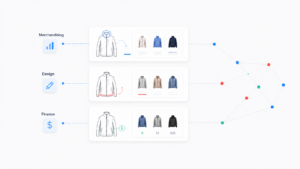
When merchandising, design, and planning teams are working from the same current view, alignment becomes faster and more natural. Conversations become more focused. Decisions happen with more context.
Leaders can see how the assortment is forming, where investments are concentrating, and where risks or gaps may be emerging. That clarity helps teams move forward with greater confidence.
Visibility stops being just a reporting function. It becomes a decision accelerator.
And when decisions happen earlier, the entire organization moves faster.
What a high-velocity merchandising organization looks like
As this new operating model takes shape, a different pattern begins to emerge.
Decisions happen earlier in the process, not later.
Teams align continuously instead of waiting for review cycles.
Strategy evolves as the line develops.
Execution begins with stronger direction and less hesitation.
For VP leaders, the benefits are clear.
You can act sooner.
Guide direction more actively.
Reduce friction across teams.
Keep strategy momentum intact.
Most importantly, you can keep pace with the market instead of reacting to it.
Operating differently, not just working harder
This shift isn’t about asking teams to move faster by working harder. It’s about creating the conditions that allow faster, more informed decisions to happen naturally.
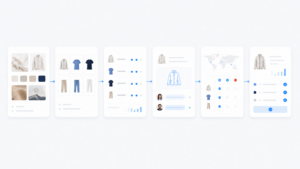
When visual line planning and reporting are streamlined, and teams have shared visibility into the assortment as it evolves, alignment happens earlier. Conversations are grounded in the same context. Decisions don’t have to wait for the next review.
For VPs of Merch, that means being able to guide strategy with greater clarity, make better-informed decisions sooner, and move more quickly when opportunities appear.
The operating model itself becomes more responsive.
The leadership takeaway
The market will continue to move faster. Trends will keep shifting. Opportunities will appear and disappear quickly. That pace isn’t slowing down.
The real question is whether internal decision-making can keep up.
The next evolution of merchandising leadership isn’t just about product instinct or financial discipline. It’s about speed to insight, speed to alignment, and speed to decision.
The teams that win aren’t just working harder — they’re seeing sooner, aligning faster, and deciding earlier. That’s what allows them to move at market speed.
Better decisions, made earlier — that’s the competitive advantage.
Get a demo of VibeIQ to see how your merchandising teams can move at the speed required of tomorrow’s state of retail. .