
For most merchandising leaders, assortment decisions are the work that carries the most consequence and generates the most difficulty — season after season, regardless of how experienced the team or how refined the process.
The natural explanation is market complexity. Trend cycles have compressed. Consumer preferences shift more quickly and less predictably. Assortments have grown more complex across categories, channels, and regions. These factors are real, and they have made the merchandising environment genuinely more demanding over time.
But they aren’t the hidden reason assortment decisions are harder than they should be.
The hidden reason is more structural — and more addressable. It lives specifically in the midstream phase of the product creation process: the moment when merchandising, design, product development, and planning must evaluate the evolving line and commit to direction before the line is fully formed, before certainty exists, and before downstream execution has anything to act on.
As explored in the first article in this series, that midstream decision moment is where the decision gap lives — the gap between what early assortment commitments require and what most organizations actually provide at the moment those commitments must be made. This piece examines the deepest structural cause of that gap: the cross-functional alignment problem that sits at its center, and what it costs when that alignment arrives too late.
The Structural Feature That Makes This Particularly Hard
The cross-functional alignment challenge in merchandising has a feature that makes it unlike most organizational challenges a VP encounters: accountability without authority.
The VP of Merchandising is typically responsible for the outcome of the assortment without having direct control over all of the teams and inputs that shape it.
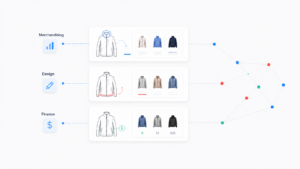
Design determines creative direction. Product development assesses feasibility and manages development timelines. Planning manages financial parameters and inventory commitments. Regional and channel merchants bring market-specific perspective. Leadership sets strategic priorities and approves direction.
Each of these teams holds part of the picture. Merchandising must synthesize them into a coherent assortment that works commercially, creatively, and operationally — across all of those dimensions simultaneously.
That synthesis requires alignment. And building that alignment requires getting multiple teams, each working from different perspectives and different information environments, to a shared view of the evolving product line — early enough in the process to act on it meaningfully.
In most organizations, there is no shared environment where that synthesis happens naturally. It has to be assembled — through meetings, through review cycles, through the manual effort of individuals translating their own view of the line into formats that others can evaluate.
The VP of Merchandising is most often the person responsible for doing that assembly. It is among the most time-consuming and structurally underserved parts of the role. And the tools available to support it — however sophisticated in their own domains — were not designed for it.
Why Each Function Sees the Line Differently
Cross-functional alignment is genuinely difficult — not because teams are uncooperative, but because each function that contributes to the assortment evaluates it through a legitimately different lens, shaped by what that function is accountable for.
Design evaluates the line through a creative lens — coherence, differentiation, trend relevance, and the integrity of the design vision across the assortment. The questions design is asking are fundamentally about what the line looks like and whether it represents something meaningful in the market.
Product development evaluates the line through a feasibility lens — what can be developed, sampled, and sourced within the constraints of the calendar and cost targets. The questions product development is asking are fundamentally about what the line can realistically become.
Planning evaluates the line through a financial lens — open-to-buy allocation, inventory investment, category distribution, and margin targets. The questions planning is asking are fundamentally about what the line can afford to be.
Regional and channel merchants evaluate the line through a market lens — what their specific customers want, what their channel requires, and how the broader assortment serves or fails to serve their specific context.
Each of these perspectives is necessary. A strong assortment requires all of them. But they are not naturally compatible — and in most organizations, they are developed independently before being brought into contact with each other at the line review. That is where the problem concentrates.
When Different Lenses Meet Only at the Line Review
The line review is the moment when these different perspectives are most formally brought together. It is also the moment when the cost of the misalignments between them is highest.
By the time the line review occurs, design has invested significant creative development in concepts that merchandising may need to redirect. Product development has assessed feasibility for products that planning may not be able to fund. Planning has built financial frameworks around category assumptions that design’s direction may not support.
Each team has done real, consequential work based on their independent view of the line — without the benefit of the other teams’ perspectives shaping that work from the start.
The alignment the line review achieves is real. But it is achieved at the point in the process where acting on it is most expensive — through rework, through revised development plans, through compressed timelines, and through the quiet erosion of confidence that comes from teams repeatedly discovering that their work needs to be significantly redirected late in the process. For most organizations, this is not an occasional failure. It is the structural norm.
Three Costs That Late Alignment Produces
Late cross-functional alignment doesn’t produce a single visible failure. It produces a pattern of compounding costs that organizations absorb across the season — costs that map directly onto the three that originate in the decision gap.
Operating Cost compounds across functions. When design advances concepts without sufficient commercial context, and merchandising commits to direction without sufficient creative and feasibility input, the rework that follows touches every team. Development resources are spent on products that are later redirected. Samples are produced for concepts that don’t survive commercial review. Timelines compress to accommodate changes that earlier alignment would have prevented. These are not isolated inefficiencies — they are the predictable output of a process that forces reconciliation late.
Speed Cost narrows the window for opportunity. When alignment hasn’t formed early enough for the organization to commit confidently to its strongest opportunities, the natural response is caution. Merchandising leaders default to safer assortments. Emerging categories receive limited investment. Products that could have driven significant revenue enter the market at reduced scale because conviction arrived too late to build organizational support behind them. The assortment is shaped as much by the limits of alignment as by the strength of the opportunity.
Sell-through suffers from decisions made under uncertainty. When commitments are locked before cross-functional conviction has genuinely formed, the assortment reflects that incomplete picture. The products that advance are the ones that felt defensible under pressure — not necessarily the ones that represented the strongest commercial opportunity. The gap between what the season could have captured and what it actually delivered shows up first in full-price sell-through, and in the markdown pressure that follows.
All three costs trace back to the same source: alignment that arrives at the moment of highest cost rather than building progressively through the midstream phase, when it is still inexpensive to address.
Why the Tools Don’t Help
Most of the tools that support the product creation process were built for individual functions — not for the cross-functional work that connects them.
Design tools are built for creative development. Planning systems are built for financial management. Product development tools are built for specification and workflow management. Each is well-suited to the work of the function it was designed for. None were designed to support the cross-functional alignment work that should happen across all of them simultaneously.
The result is that alignment in merchandising relies primarily on meetings, presentations, and the manual effort of individuals translating information from one functional environment into formats that others can evaluate. That process is time-consuming, imprecise, and always at risk of being overtaken by the pace of the calendar.
For organizations that have invested in data sharing and integrated planning environments, the friction has been reduced at the margins. But the fundamental challenge persists: without a shared midstream environment where every function can see the same real-time view of the evolving line — with product visuals, commercial data, feasibility context, and regional and channel perspective visible together — alignment requires active assembly rather than emerging naturally from shared visibility. And active assembly, however well-executed, will always arrive later than shared visibility would.
What Earlier Alignment Actually Requires
For VPs of Merchandising, the alignment challenge is not primarily a relationship challenge or a process challenge — though both matter. It is an information and environment challenge.
The teams responsible for the assortment don’t lack the expertise or the willingness to align. What they lack is a shared midstream environment where their different perspectives can meet around the same real-time view of the evolving line — early enough for that shared view to shape the line rather than simply react to it.
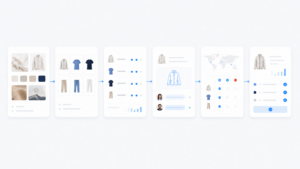
When that environment exists — when design, merchandising, product development, and planning are all evaluating the same live picture of the assortment, with the full context each function needs visible together — the dynamics of the process change fundamentally.
Misalignments surface earlier, when the cost of addressing them is still low. Shared conviction builds progressively rather than being forced at the line review. The line review becomes a moment of confirmation rather than a moment of negotiation. And the assortment that results reflects the genuine best thinking of every function — not the compromises that late-stage alignment tends to produce.
That shift also changes the competitive picture. Brands that build alignment earlier don’t just reduce rework and operating cost — they consistently get to better product decisions faster. They bring more relevant product to market with less friction. And they build a compounding organizational advantage that brands still assembling alignment under deadline pressure cannot replicate through execution efficiency alone.
That is the alignment capability most retail and apparel organizations haven’t yet built. For merchandising leaders navigating the compounding costs of late alignment season after season, it is one of the most significant structural improvements available — and the one most directly within reach.
About VibeIQ
The alignment burden described in this piece is something most merchandising leaders carry personally. You’re the one convening the cross-functional conversations. You’re the one translating between lenses that don’t naturally speak to each other. You’re the one accountable for a direction that depends on teams you don’t fully control arriving at shared conviction — before the calendar runs out.
That is not a solvable problem through better process or stronger relationships alone. It requires a different environment: one where every function can see the same evolving line, in real time, and where conviction can build naturally from shared visibility rather than being assembled under pressure.
VibeIQ is purpose-built for that midstream moment — the phase where definition, direction, and decision happen, and where the decision gap either widens or closes. If the alignment challenge described here is a pattern that repeats in your organization, we’d welcome the conversation.