
For retail and apparel brands, margin pressure often appears downstream.
It shows up as excess inventory. Markdowns begin earlier in the season. Promotional activity increases. Products are discounted or cleared to make room for the next assortment. These outcomes are regularly attributed to weak demand, aggressive competition, or shifting consumer trends — forces that feel external and, to some degree, unavoidable.
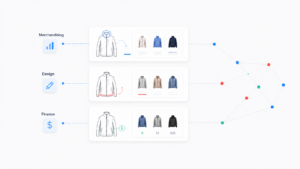
But for most enterprise brands, the root cause is not in the market. It is in the decision phase — the ungoverned moment between creative exploration and operational commitment where merchandising, design, and product teams determine which products the organization will invest in for the season.
Margin is the financial surface where the full cost of a poorly governed decision phase becomes visible. The three structural costs the decision gap produces — time-to-market loss, operating inefficiency, and sell-through shortfall — do not appear separately in the P&L. They converge there, as margin. And by the time they do, the decisions that produced them were made months earlier, in a phase most organizations have never treated as a governed business process.
Most of the tools organizations reach for when margin pressure intensifies — better forecasting, smarter pricing, AI-powered markdown optimization — are valuable capabilities. But they share a structural limitation: they operate after the decisions that created the margin problem have already been made. They help manage consequences. They cannot prevent those consequences from forming.
The leverage point is upstream. It is still available. But it requires recognizing where margin performance is actually shaped.
Why Margin Is Shaped Before Products Reach the Market
Margin outcomes are conventionally analyzed as a function of pricing strategy, cost of goods, supply chain efficiency, and promotional discipline. These levers are real and worth managing carefully. But they all operate on an assortment that was already committed to — one whose margin potential was set earlier, during the product creation process, before development began.
Before the first unit goes into sampling, leaders make a set of foundational decisions that determine the financial structure of the season:
- Which product concepts move forward and receive development investment
- How wide or narrow the assortment will be across categories
- Where development resources and production capacity will be concentrated
- Which product ideas are deprioritized or eliminated before they cost anything
These decisions determine how confidently the organization can commit production capacity and inventory investment later in the process. They determine whether the season is structured to capture demand aggressively or manage risk conservatively. And they determine, before a single downstream system is activated, the ceiling on what the season’s margin can achieve.
In other words: margin is not primarily a pricing or execution outcome. It is, in large part, a product decision outcome. And most of the decisions that shape it happen in the phase that most organizations govern least.
Early Decisions Shape the Financial Structure of the Season
When product decisions are made early and with genuine clarity, organizations gain something that downstream optimization cannot provide: time. Time to scale winning concepts more aggressively. Time to align production capacity with anticipated demand before it becomes constrained. Time to commit inventory with the confidence that comes from a clear, shared view of the evolving line.
This alignment — conviction formed early, investment scaled accordingly — is what allows brands to bring the right products to market at the right scale and maximize full-price selling before trend momentum fades. It is the financial expression of speed of relevance: reaching the right products fast enough to invest in them fully while the opportunity is still at its peak.
When product decisions arrive late, that alignment breaks down. And the financial consequences begin accumulating immediately — not at markdown time, not at sell-through review, but at the moment conviction formed too late to be fully acted on.
How Late Decisions Lead to Conservative Investment — and Constrained Margin
When conviction around product decisions forms late in the process, the organization loses the time required to fully scale opportunity. Development timelines are already compressed. Production planning is already underway. Inventory commitments must be made quickly, against a line that has not fully taken shape.
Under these conditions, the rational response is to reduce exposure. Rather than committing aggressively to promising products, organizations default to more cautious investment strategies. The logic is defensible: when conviction is late and time is short, limiting downside feels like responsible risk management.
But limiting downside also limits upside. And the upside that is forgone at this stage is not recoverable downstream. No amount of pricing optimization or promotional strategy can expand a market opportunity that the organization chose not to invest in fully when the window was open.
This is also the point where the limitations of downstream AI investments become most visible. Organizations may have sophisticated tools for demand forecasting, inventory optimization, and markdown management — and those tools may be working exactly as designed. But they are optimizing around a product line that was already shaped by late, conservative decisions. They can improve how efficiently the organization manages a constrained assortment. They cannot expand the opportunity that conservatism already foreclosed.
The margin problem was not created by those tools’ absence. It was created earlier — at the moment when leaders lacked the shared context and decision support needed to commit with confidence while the window was still fully open.
Late Conviction Produces Defensive Assortments
When product decisions arrive late, organizations instinctively retreat to safer ground. They prioritize proven product categories over emerging ones, incremental variations of existing products over genuine innovation, and smaller initial buys spread conservatively across the assortment rather than concentrated investment in the concepts most likely to win.
Each of these choices is understandable in isolation. Collectively, they produce an assortment designed to perform predictably rather than capture opportunity aggressively. And a predictable assortment in a fast-moving consumer market is not a stable outcome — it is a declining one. The opportunity cost of consistent conservatism compounds season over season, as competitors who commit earlier take the emerging categories, build the brand associations, and capture the full-price selling that defensive assortments leave on the table.
The Hidden Cost of Misaligned Investment
Late product decisions do not only limit opportunity. They can also direct resources toward the wrong products entirely — and this is where margin erosion moves from structural to acute.
When leaders must commit resources without full clarity or a shared view of the evolving line, development capacity and production investment tend to flow toward concepts that feel defensible rather than toward those most likely to win. The products that move forward are the ones that were easiest to evaluate with the information available — not necessarily the ones that best represented the market opportunity.
The financial chain that follows is one most retail and apparel organizations know intimately, even if they rarely trace it to its origin:
Development resources are invested in concepts that ultimately underperform consumer expectations
Production capacity is committed to an assortment misaligned with real demand
Inventory is built at volumes that exceed what consumers actually want
Products reach the floor without the demand signal needed to sustain full-price selling
Markdowns begin earlier than planned, at deeper levels than modeled, to clear inventory that should not have been built
Each step in that chain was set in motion by decisions made months before the first markdown was taken. And each step compounds the margin damage that follows.
Markdowns Are the Final Symptom, Not the Origin
Markdowns rarely originate at the moment of sale. They are the final, visible symptom of a misalignment that was established much earlier — at the decision phase, when product direction became commitment without the clarity or shared context those commitments required.
By the time products reach the market, the decisions that shaped the assortment are long since locked. Inventory has been produced. Development costs have been incurred. Production capacity has been allocated and largely consumed. The organization is now managing the consequences of earlier commitments, not correcting them.
AI-powered markdown tools and promotional optimization systems can help minimize the financial damage at this stage. They are worth deploying. But they are, by design, operating on outcomes that were set in motion months earlier. They cannot recover the margin that was lost when conviction formed too late, when the wrong products received investment, or when assortments were built conservatively against a market that was willing to reward more. The leverage point was upstream. By markdown time, it is gone.
This temporal distance between cause and symptom is one reason the decision phase remains so consistently underinvested. The margin pressure that appears in Q3 does not obviously connect, in the financial review, to the line review decisions made in Q4 of the prior year. The connection is real and direct. But it is separated by enough time, and enough intervening variables, that organizations rarely treat it as a governance problem. They treat it as a market problem — and reach for market-facing solutions that cannot reach the actual cause.
Why Margin Pressure Is Intensifying — and Why the Decision Gap Is the Reason
Maintaining strong margins has become structurally harder in today’s consumer markets. Trend cycles compress. Assortments have grown more complex. Consumer demand shifts faster than traditional product calendars were designed to accommodate. The window between trend emergence and peak demand — the period during which an organization can invest fully in the right products and capture full-price sell-through — is narrowing.
AI is accelerating these dynamics from multiple directions. Consumers are exposed to more trends more quickly across more channels than ever before. The speed at which new demand signals emerge and fade is increasing. And organizations that cannot identify and commit to the right opportunities early enough find themselves perpetually one step behind a market that is moving faster than their decision process can accommodate.
This is the core dynamic that makes the decision gap an increasingly consequential financial variable. In a slower market, late decisions cost something but left room for recovery. In a faster market, they cost more — because the window for full-price selling is shorter, the penalty for missing it is steeper, and the cost of carrying inventory that was built for demand that has already moved on is higher.
Margin Depends on Decision Timing
Organizations that maintain consistently stronger margins over time share a characteristic that rarely appears in their margin improvement plans: they commit earlier, and with greater confidence, to the products that matter most.
That early conviction is not the product of better forecasting or more sophisticated pricing models. It is the product of a governed decision phase — one where merchandising, design, and product teams can evaluate the evolving assortment together, with shared context and decision support, and reach confident commitment before the window of full investment closes.
Decision timing, in this sense, is a direct financial variable. It determines how much of the available market opportunity an organization is positioned to capture at full price. It determines how much inventory is built on conviction versus caution. And it determines, in large part, the margin structure the organization brings into the season before a single downstream lever is pulled.
Rethinking Margin Strategy in Product Creation
Most organizations approach margin improvement through a familiar set of operational strategies: reducing cost of goods, improving supply chain efficiency, refining pricing and promotion discipline, and increasingly, deploying AI to improve forecasting accuracy, inventory management, and markdown optimization.
These initiatives are worth pursuing. Each addresses a real cost. But they share a structural limitation that even the most sophisticated deployments cannot overcome: they operate after product direction has already been set. They optimize execution on an assortment whose margin potential was determined earlier, in the decision phase, by commitments that were already made.
Improving how efficiently an organization manages a constrained assortment is not the same as preventing the assortment from being constrained in the first place. And for brands where margin pressure is persistent and resistant to downstream intervention, this distinction matters enormously.
The most underleveraged margin opportunity in retail and apparel is not better execution. It is better decision-making in the phase where the assortment is formed. AI that operates within the shared context of the evolving product line — helping merchandising, design, and product teams evaluate options together, build conviction earlier, and commit to the right products before the window of opportunity closes — is a categorically different investment than the AI most organizations have made. And for brands where margin pressure shows up reliably each season, it may be the most consequential investment still available.
Margin Is Where the Decision Gap Shows Its Full Cost
Across this series, we have examined how decisions made in the ungoverned phase between creative exploration and operational commitment shape business performance in ways that rarely surface in the moment — but consistently surface in the results.
We have seen how revenue potential is set before development begins, when foundational assortment choices determine what the business is capable of bringing to market. We have seen how timing — specifically, the moment at which conviction forms relative to the window of available opportunity — determines how much of that revenue potential the organization can actually capture. We have seen how the absence of a live, shared view of the evolving line keeps leaders working from incomplete pictures, producing hesitation and mis-commitment in the decisions that matter most. And we have seen how speed, applied before those decisions are clear, amplifies constrained outcomes rather than expanding them — while speed of relevance, the real competitive variable, depends entirely on how quickly the decision gap closes.
Margin is where all of that converges on the P&L.
The time-to-market cost of the decision gap shows up as forgone full-price revenue — opportunity that existed but that the organization could not invest in fully because conviction arrived too late to scale it. The operating cost shows up as development waste, sampling expense, rework, and inefficiently allocated production capacity on the wrong products. The sell-through cost shows up as markdowns taken earlier and deeper than planned, on inventory built for demand that was misread, or built conservatively against demand that was real but not fully pursued.
None of these costs originates in the market. None of them originates downstream. All of them originate in the decision phase — the moment when the right information was not available, or not visible, or not shared across the teams responsible for making the commitments that set the season’s ceiling.
The organizations that will build durable margin advantage in fast-moving consumer markets are not simply those that optimize execution most efficiently. They are the ones that govern the decision phase — that bring the shared context, live visibility, and decision support that confident early commitment requires. That is where margin is actually shaped. And it is still the most underleveraged governance opportunity in retail and apparel product creation.
The Margin Review Is Looking at the Wrong Quarter
Every quarter, retail and apparel executives review margin performance against plan. They examine sell-through by category. They analyze markdown depth and timing. They evaluate the promotional calendar and its cost. They look for the decisions that could have been made differently — the price points, the inventory positions, the promotional triggers — that might have produced better outcomes.
What most margin reviews do not examine is the product creation process from four to six months prior — the definition, direction, and decision sequence where assortment direction was set. The line review meetings where concepts were still evolving across disconnected tools. The decisions that were deferred because shared clarity hadn’t formed yet. The investment that flowed to safer products because no one in the room had a complete view of the line. The conviction that arrived too late to scale the products that actually had the best chance of winning.
That is where this season’s margin was shaped. Not in the promotional calendar. Not in the pricing model. In the phase where concepts were explored, where direction was established, and where decisions were made with more or less confidence than the opportunity warranted.
The downstream levers will always be necessary. But for brands where margin pressure is persistent and resistant to quarterly intervention, the leverage point is in that earlier phase. It is still available for next season. And it starts with governing the definition, direction, and decision sequence in an environment where the full picture is visible, shared conviction can form earlier, and investment can scale behind the right products before the window closes.
VibeIQ is built for that phase. If your organization is ready to examine where this season’s margin was really shaped — and what governing that sequence differently could mean for next season — that is where the conversation starts.