You’re standing in the line review. Two categories arrived at nearly the same material expression independently — neither team knew what the other was developing. A story that should anchor the season is buried under three concepts that are all fighting for the same energy. And the only reason any of this is visible now is because this is the first time anyone has seen the full picture — three weeks before commitment.
You know the line needs reshaping. You also know that the cost of reshaping it at this stage — in sampling, in rework, in the organizational effort of realigning teams under pressure — is punishing. So the line that moves forward is close to the one you wanted, but not the one you would have composed if you’d had this view from the beginning.
This is the gap between making a great product and making a great line. It’s a distinction you hold instinctively, apply every day, and almost never see reflected in the tools and processes your organization builds around you.
What Line-Level Thinking Actually Means
Line-level design thinking is not assortment planning. Assortment planning is a commercial and structural exercise — style counts, category architecture, price point distribution, financial targets by classification. Those are essential inputs. They define the commercial framework.
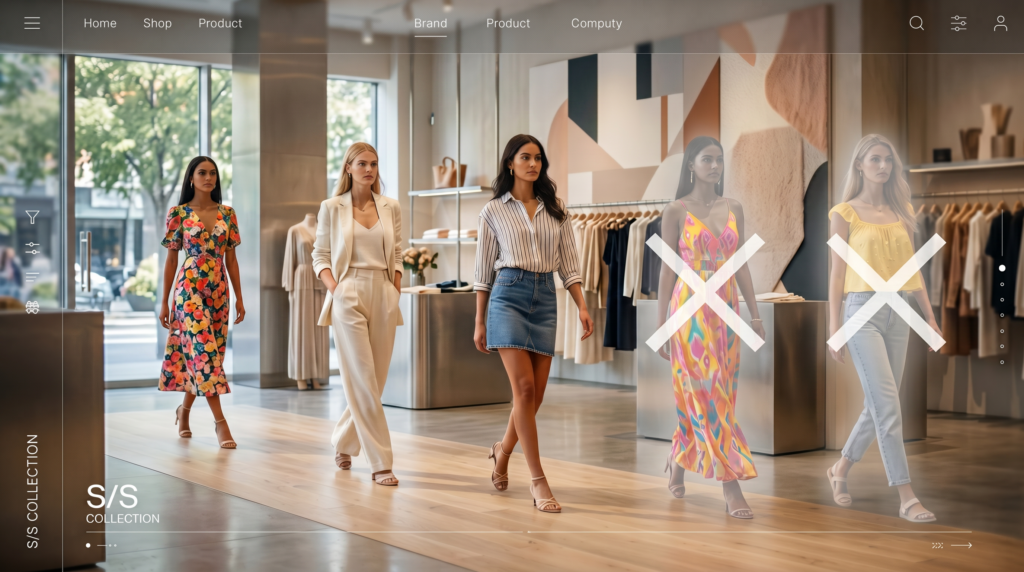
Line-level thinking operates on a different dimension. It’s concerned with how products relate to each other creatively. How color stories build across categories. How material choices create continuity or deliberate contrast. How a capsule carries a narrative arc that gives the consumer a reason to buy into the story, not just the item. How the collection reads as a cohesive statement in a showroom, across a floor set, through a digital shelf.
You’re making decisions about contrast, rhythm, proportion, and emphasis — the same principles that govern the design of a single product, applied at the scale of the full assortment. You’re composing, not just creating. And the difference between a composed line and an assembled one is the difference between a collection that has a point of view and a catalog that has a lot of products. It’s also the capability that most product creation processes are structurally unable to support.
Why Current Processes Work Against It
Most design processes are organized around individual concepts. A concept is developed, refined, presented, and evaluated as a discrete unit. This feels natural — it mirrors how creative work is produced. But when evaluation is organized this way, the concept is judged on its own merits without a clear view of how it fits within the full line as it’s currently evolving. You’re not looking at the concept and the full evolving assortment in the same space, at the same time, with the same information visible.
The tools reinforce this. Concept boards present work by category, by delivery, by design story — not in the context of the full assortment. Mood boards capture creative intent at a moment in time but aren’t connected to the evolving line as concepts enter, shift, and drop. Merchandising line plans carry the commercial architecture but without the visual context that would let you see how creative direction and commercial structure are interacting as both take shape.
You’re making product-level decisions continuously and line-level decisions episodically. And because the line is the aggregate expression of those product-level decisions, its true shape reveals itself fully only when it’s expensive to change.
The line review is where the full picture finally becomes visible. It’s where you see how the collection holds together. Where stories overlap. Where a category has drifted from the seasonal direction. Where two development groups arrived at similar expressions without knowing it. Where the creative emphasis of the line doesn’t match the commercial emphasis the business needs. By then, development timelines are constrained and the cost of reshaping is high.
What Changes When You Can See and Shape the Full Line
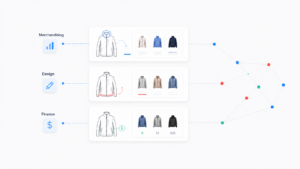
When the full evolving assortment is visible in a shared environment — product visuals, attributes, structure, and commercial context together, updated as the line takes shape — your relationship to the assortment changes fundamentally.
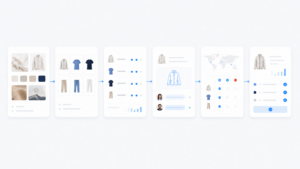
During exploration, you can direct creative energy toward the opportunities the line actually needs. Not by constraining exploration — by informing it. As concepts enter the shared view, you can see where the line is building strength, where it’s building redundancy, and where open territory exists that creative work should pursue. The creative field stays wide. It’s also better directed.
During alignment, the shift deepens. You’re not evaluating individual concepts against an abstract sense of the line. You’re evaluating concepts within the actual line — seeing how each one interacts with everything around it. Redundancies surface before they require painful late-stage cuts. Gaps aren’t something you suspect but can’t prove; they’re visible and addressable while there’s still creative runway to respond.
The relationship between design and merchandising shifts too. When both teams can see the evolving assortment in the same space, the conversation moves from two teams presenting separate perspectives and negotiating toward alignment to both looking at the same picture and shaping it together. Your line-level judgment doesn’t need to be translated into commercial terms to be heard.
By commitment — when style counts are confirmed and sourcing capacity is reserved — the line that advances is not a collection of individually approved concepts assembled into something close to coherent at the last possible moment. It’s a line that has been composed deliberately, shaped by a design leader who could see the full picture continuously and who exercised creative judgment throughout the process, not just at the review where the picture was finally visible.
Why This Matters More Than Any Single Product Decision
The most consequential cost of product-level thinking — of assembling assortments from individually approved concepts without a governing creative composition — is incremental creative erosion. When the line is assembled rather than composed, it regresses toward familiarity. The products that survive a process organized around individual evaluation are the products that are easiest to say yes to in isolation — the ones that look like what has worked before, that carry the least risk, that require the least conviction. Over several seasons, this regression narrows the creative point of view. What was a distinctive brand voice becomes a safer one — not because anyone chose safety, but because the process selected for it.
The design leader who consistently composes at the line level is the counterweight to that erosion — the person whose judgment protects the brand’s creative identity by ensuring that each season’s assortment expresses a coherent, intentional, distinctive point of view. And the downstream effects compound. A composed line produces a sell-in story that buyers can invest in — they’re buying into a vision, not evaluating a list of options. It produces a consumer experience where the brand’s point of view comes through across channels without needing to be explained. It focuses investment: sampling is concentrated, development resources go toward products with genuine conviction behind them, marketing lands on products positioned with precision within a clear seasonal story.
The Capability That Deserves the Right Environment
A great product and a great line are not the same achievement. They require different vantage points, different information, different kinds of creative judgment. You have the judgment to compose at the line level — you’ve built it over years and seasons. The constraint you face is rarely one of talent or vision. It’s one of environment: whether you can see the full picture clearly enough, early enough, and continuously enough to compose with the intention the work requires.
That capability — designing for the line, not just the product — is the highest contribution you make to the business. It deserves an environment that supports it.