
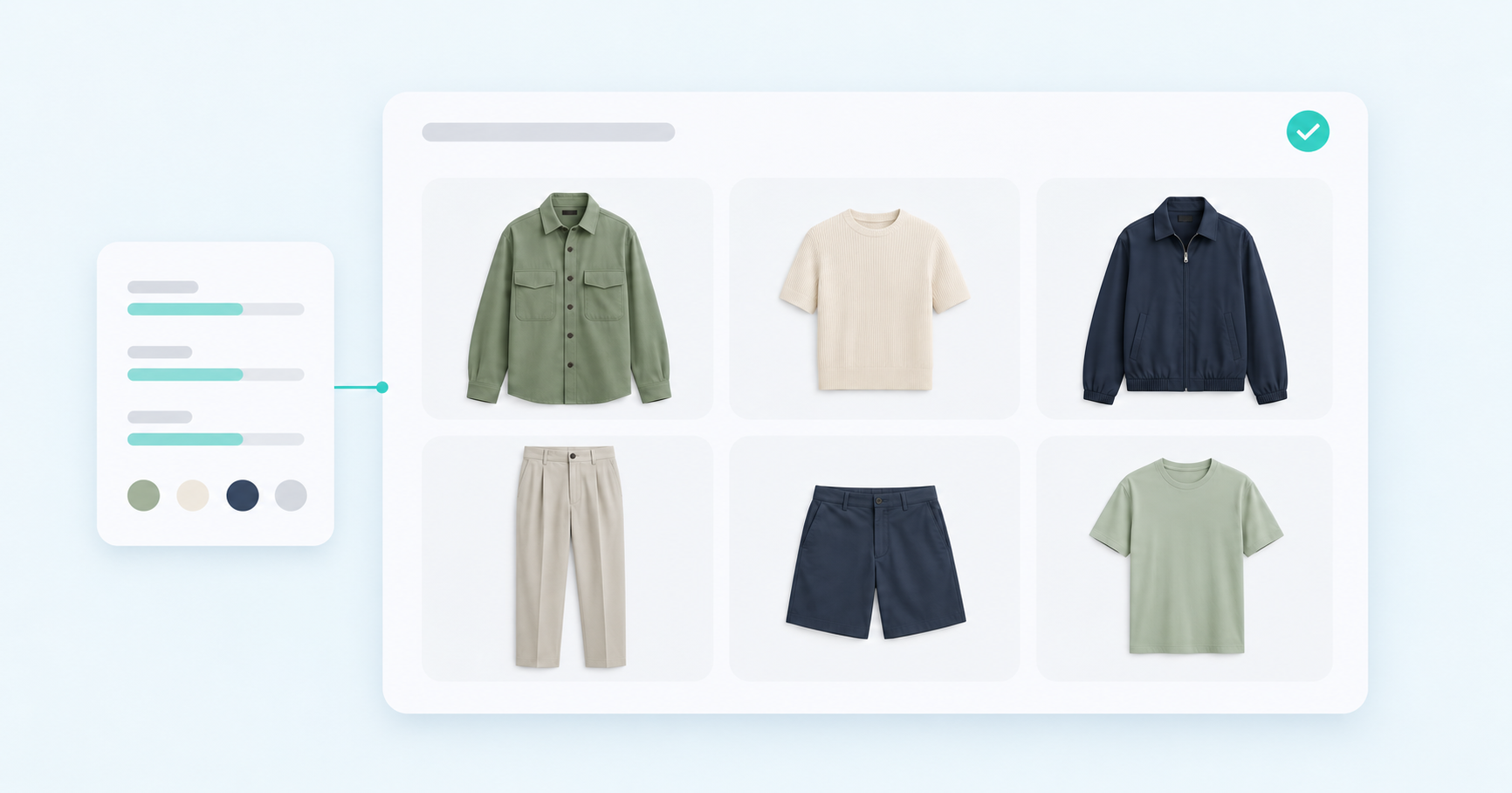
Assortment planning in fashion is the process of deciding which styles, colorways and options a brand will offer in a season, and how that mix varies by region, channel and account. It balances newness and carryover, price architecture, option counts and margin against the financial plan.
Most apparel and footwear brands have a solid financial plan. The harder part is turning it into a product line that hits those targets without gaps, near-duplicates or last-minute changes. That translation is where assortment planning happens.
This guide covers what makes assortment planning different in fashion, the process step by step, the most common mistakes, the metrics worth tracking and where software fits.
What is assortment planning in fashion?
Assortment planning answers three questions each season: what to offer, how much breadth to carry in each category and price tier, and where each product will be offered.
In fashion it sits between two other processes. Merchandise financial planning sets the targets, such as sales, margin, inventory and option counts by category. Product development, usually managed in PLM, specifies, costs and samples the styles that are approved. Assortment planning is the work in between: turning targets into an actual set of products.
It overlaps with line planning. Line planning generally defines the overall product offer for the season, while assortment planning selects the mix for a particular region, channel, store or account and may include quantities. Our guide to visual line planning covers that side in more detail.
Why assortment planning is harder in fashion
- Most of the line is new each season. Short lifecycles and trend risk mean teams can't rely on sales history alone. They are making decisions about products that don't exist yet.
- Options multiply quickly. One style becomes several colorways, and in footwear each colorway can become many size and width combinations. Option counts drift away from plan without anyone deciding they should.
- Products have to work together. A line can meet every financial target and still have three tops for the same occasion and nothing at the opening price point. That's why the plan can be right while the line is wrong.
- Every market needs its own version. The global line is adapted for regions, wholesale accounts and DTC, and each adaptation can turn into a separate file. Read more on the cost of rebuilding regional assortments.
- Decisions keep changing. Concepts are added and dropped up to the final line review, and every change has to be carried into boards, decks and line sheets. Those late changes, or redecisions, create rework across teams.
The fashion assortment planning process, step by step
- Start from the financial targets. Bring in sales, margin, option counts by category, price tiers and delivery windows from your merchandise financial plan.
- Set the line architecture. Decide breadth by category and price tier, the balance of opening, core and premium price points, and how many options each category can support.
- Decide carryover versus newness. Review last season's performers and decide which styles carry forward, which are refreshed with new colorways and where new products are needed.
- Build with placeholders. Before every product is designed, add placeholders for open needs so the plan shows where concepts are still required. Replace them with concepts and products as design progresses.
- Review the line visually. Look at products together by category, price and delivery, alongside margin and option counts. This is where duplication and gaps become obvious, and it's the point of a good line review.
- Build regional and channel assortments. Start from the global line and let each market add or drop options, instead of rebuilding the assortment in separate files.
- Settle the line before sampling. The most expensive changes are the ones made after samples are ordered. Aim to agree what moves into development before that point.
- Carry the assortment into sell-in. Line sheets and buyer presentations should come from the same assortment, so late changes don't create conflicting versions.
Common assortment planning mistakes
- Planning in spreadsheets, reviewing in decks. The numbers live in one file and the product imagery in another, so review prep becomes reconciliation instead of decision-making.
- Judging styles one at a time. Strong individual concepts can still overlap. Without seeing the set together, near-duplicates make it through to sampling.
- Rebuilding the line for every region. When regional teams copy the global line into their own files, upstream changes don't reach them, and global teams can't see what each market chose.
- Deciding too late. If the line isn't settled until after sampling, every drop or swap costs more in samples, development time and rework.
Metrics to track
- Option counts versus plan, by category and price tier
- Price architecture: how options are spread across opening, core and premium price points
- Newness mix: new, carryover and refreshed styles
- Planned margin by category
- Productivity per option from previous seasons, used to set breadth
- Changes after sampling: how many products were dropped, swapped or added late
Where assortment planning software fits
Fashion brands usually have several systems around their assortment decisions. Merchandise financial planning tools set the targets. Some assortment planning tools focus on quantities, store clustering and optimization. PLM manages specifications, costing and samples once products are approved.
What's often missing is a shared place where merchandising and design build and review the line itself, with product imagery next to the numbers. That's the role of visual assortment planning software like VibeIQ. It keeps imagery, prices, attributes and decisions connected to one live line, so teams can compare options, build regional selections and make changes during the review instead of after it.
Vera Bradley used VibeIQ to see its full assortment before sampling and cut 10% of seasonal SKUs before samples were made.
Frequently asked questions
Why is assortment planning important?
Assortment planning decides what customers can actually buy. The decisions made here drive development spend, sampling, inventory and markdowns, so getting the mix right early protects margin and reduces wasted work later in the season.
What is the difference between assortment planning and merchandise planning?
Merchandise financial planning sets the financial targets: sales, margin, inventory and option counts. Assortment planning turns those targets into specific products and decides the mix for each region, channel or account.
What is the difference between assortment planning and line planning?
Line planning defines the overall product offer for the season. Assortment planning selects the mix for a particular market, channel or account. In fashion, many teams handle both in the same workflow, often through visual line planning.
When should fashion brands start assortment planning?
As soon as seasonal targets are set, and before design is complete. Using placeholders for open product needs lets teams shape the line while concepts are still being developed, so decisions happen before sampling rather than after it.